Interlocking driveway vs asphalt: how to choose what fits your property
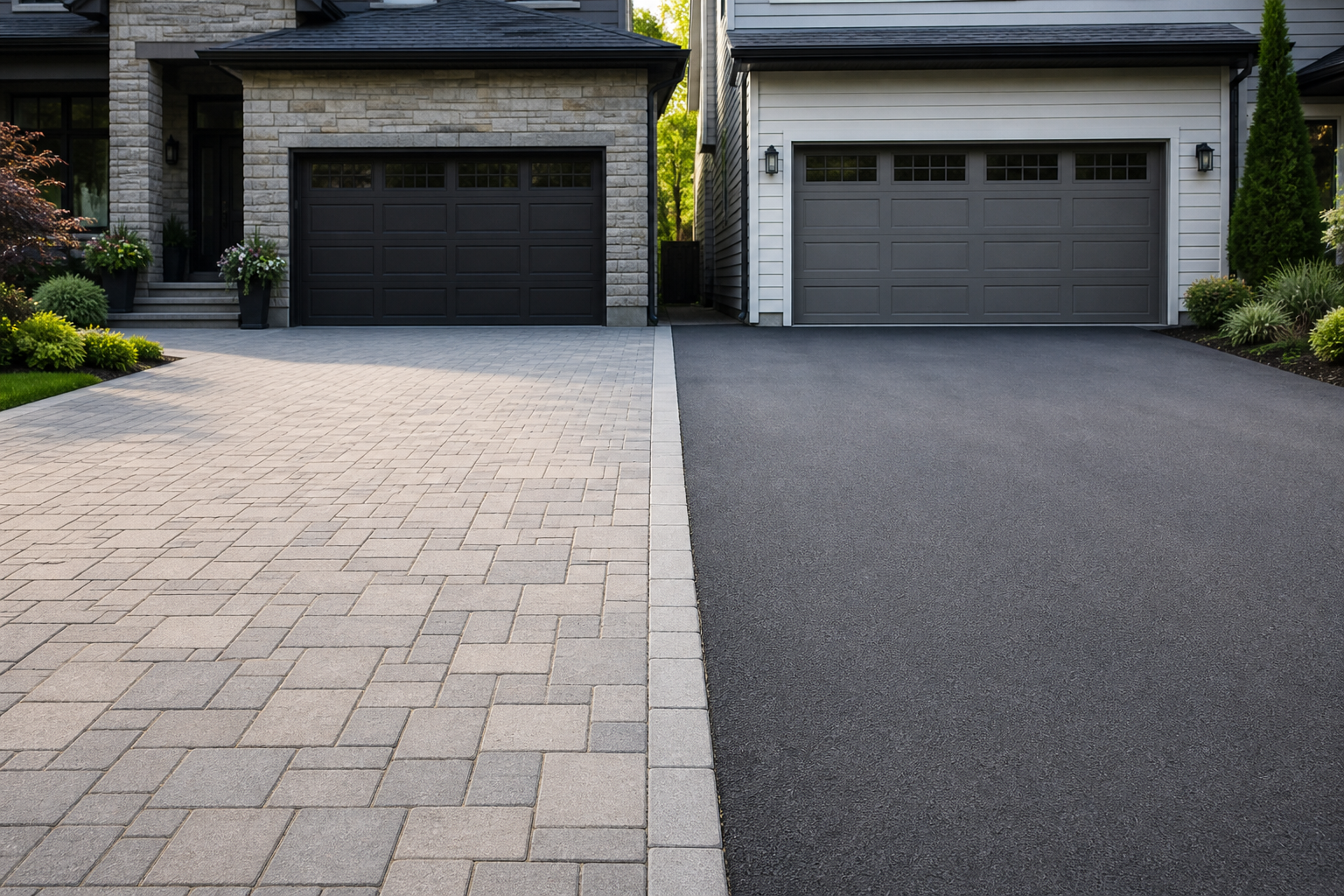
Standing at the fork between an interlocking driveway vs asphalt often comes down to how you want the space to look, feel, and function over time. Rather than chasing one-size-fits-all advice, use the comparison below to match each surface to your priorities: aesthetics, installation approach, maintenance style, repair preferences, drainage, edges and transitions, and day-to-day usability.
Quick take: a fast decision framework
If you need a quick way to narrow your choice, start with what matters most to you right now.
- If you want patterns, borders, or varied textures that can echo paths, steps, or patios, an interlocking surface is often selected for design flexibility.
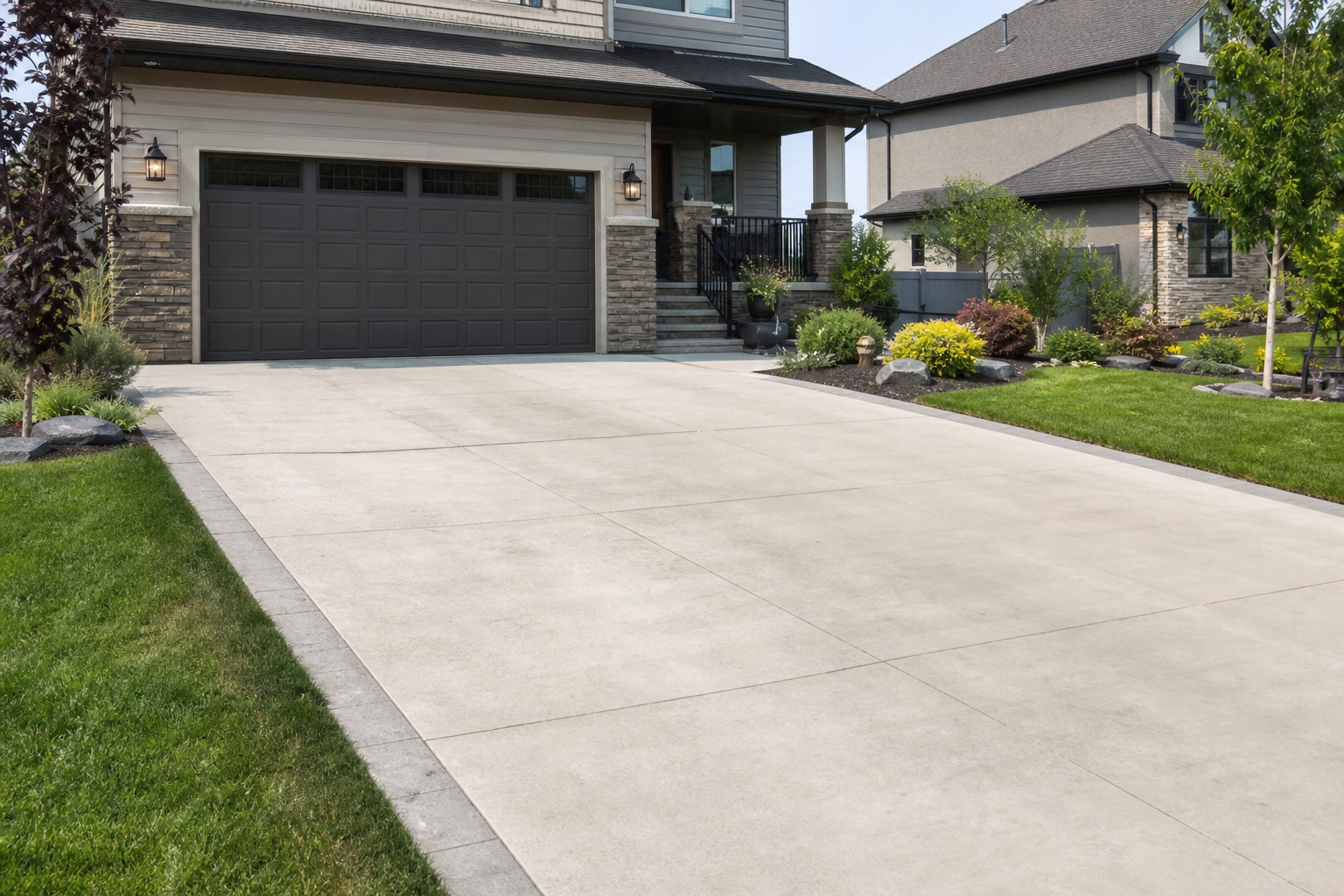
- If you’re aiming for a continuous, uniform surface with a straightforward look, asphalt is commonly chosen.
- If you prefer the option to address localized issues in sections, modular surfaces with individual units (such as interlocking) can make targeted work possible.
- If you lean toward broad, blanket-style upkeep, a continuous surface (such as asphalt) aligns with that approach.
Not sure yet? The sections below break the choice into clearer, verifiable questions you can use with any contractor.
Look, feel, and curb appeal
Both surfaces can boost curb appeal, but they do it differently. Consider how each will relate to your home’s architecture, walkways, entries, and surrounding landscape features.
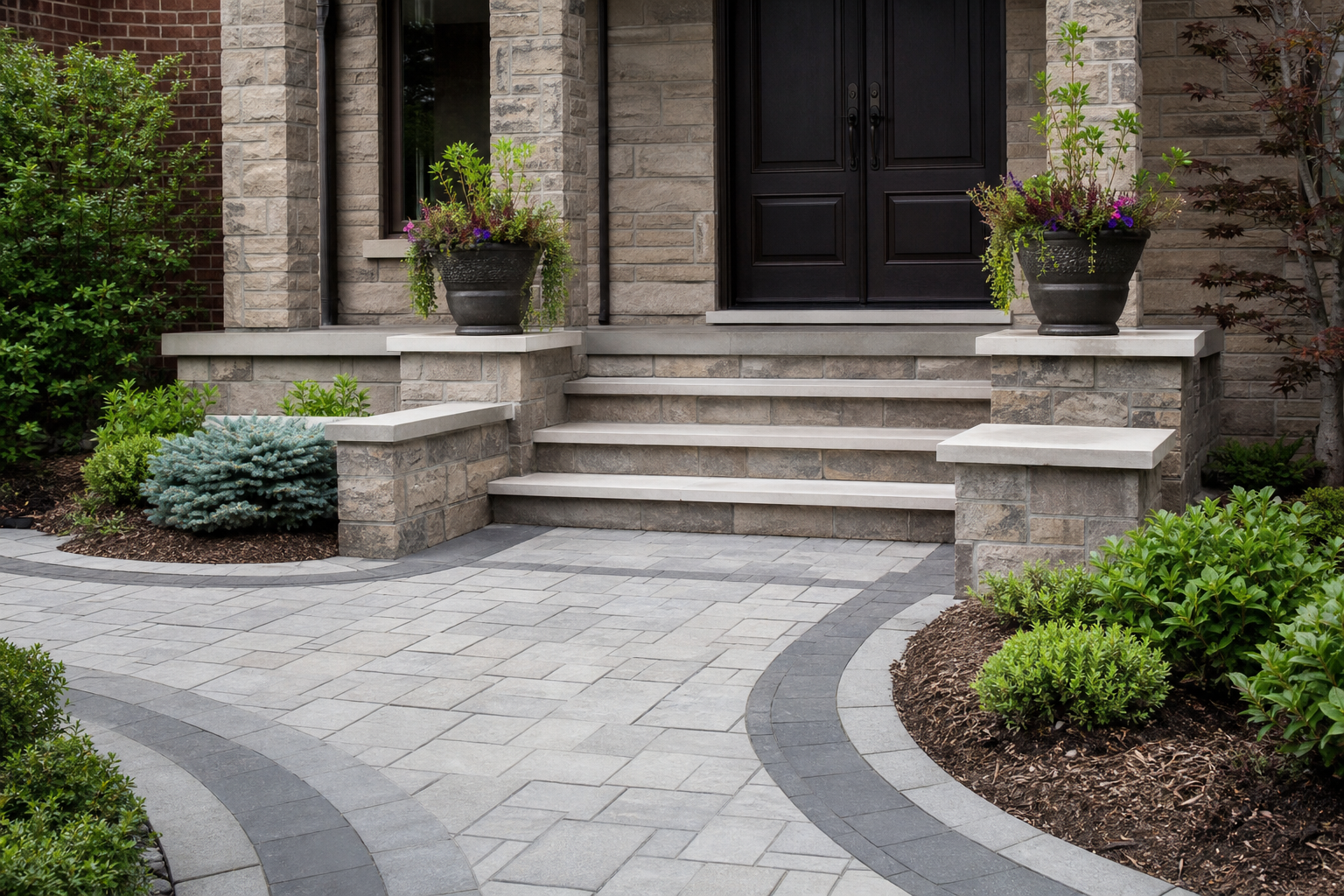
- Design language: Interlocking allows you to select unit shapes, patterns, and borders to echo lines from steps, walkways, or patio spaces. Asphalt offers a single, continuous field that can make a driveway recede visually and highlight planting or stone features around it.
- Colour and tone: With interlocking, the palette and blend can be part of the design. With asphalt, the uniform tone can create a clean backdrop, letting lighting, beds, or stone accents do the visual work.
- Edge definition: Interlocking typically pairs well with crisp edging details and transitions to other hardscape areas. Asphalt’s clean, uninterrupted mass can feel simple and modern when paired with neat borders or planting strips.
Tip: Bring a few photos of nearby features (steps, front walk, porch, or garden bed edges) to ensure your final surface harmonizes with existing lines and materials.
Installation and base-prep questions to ask
Any driveway is only as sound as its preparation. Regardless of surface type, clear conversations about base work can pay off later.
- Excavation plan: What depth is being considered and how will subgrade conditions be evaluated on site?
- Base materials: What type of base material is being proposed and how will it be placed and compacted in lifts?
- Grades and water movement: Where does surface water go, and how will slopes be set to direct water away from structures and walkways?
- Edge restraint: What holds the edges in place? Ask about specific edge details and how transitions to walks or steps will be handled.
- Access and staging: How will materials and equipment move through the property, and how will neighbouring features be protected?
Use these same questions whether you’re comparing an interlocking build or an asphalt drive. The right preparation helps either surface perform as intended.
Maintenance and repair considerations
Your preferred maintenance style should guide the choice just as much as the initial look.
- Modular vs continuous: Interlocking consists of individual units, which allows for section-based attention if a spot needs work. Asphalt is a continuous surface, so broader-area attention is commonly considered for refreshes.
- Day-to-day care: Consider how you like to manage edges, keep surfaces tidy, and protect adjacent features. For either surface, plan simple routines you’ll actually follow.
- Spot attention vs whole-area routines: Ask yourself whether you’d rather touch up small areas occasionally or attend to the full field less frequently but in bigger moments. Pick the surface that pairs with your style.
Before you start, capture a simple maintenance plan in writing: what you’ll do, how often you’ll check for issues, and who to call if you spot something that needs attention.
Drainage, edges, and transitions
How the driveway meets everything around it—garages, walks, steps, lawns, and garden beds—affects everyday use and long-term tidiness.
- Where water goes: Confirm the slope and how runoff will be directed. Ask to see proposed high and low points and any planned drains or channels.
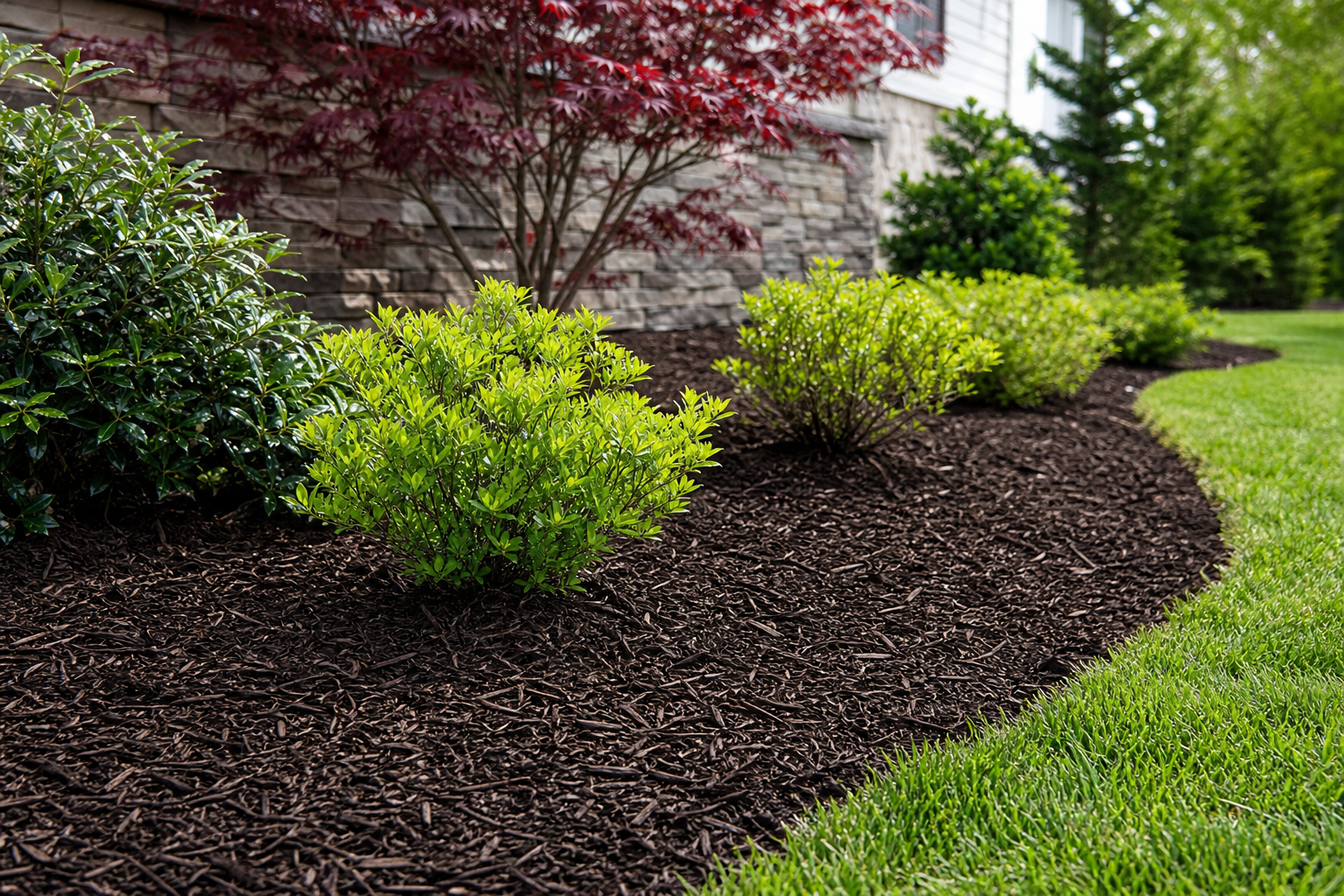
- Critical edges: Driveway margins near lawns and beds benefit from clear definitions so mowing, trimming, and cleanup stay easy.
- Meeting other surfaces: Plan clean transitions where the driveway lines up with walkways, steps, or patios. For interlocking, ask about borders and soldier courses. For asphalt, ask about saw-cut lines and neat terminations.
Walk the edge line with your contractor before work begins. A few minutes spent aligning edge details to how you actually use the space can simplify maintenance for years.
Daily use, safety, and access
Think about the tasks you do week after week. Your driveway is a working surface—parking, unloading, kids on scooters, rolling bins, and clearing debris.
- Traction and feel: Try a sample board or small mock-up if possible to get a sense of surface texture underfoot and under tires.
- Lighting and visibility: A uniform surface can make lighting effects stand out; patterned surfaces can guide the eye naturally. Decide what you want people to notice at night.
- Bins, stands, kick plates: Note where you stage bins or rest bikes and ensure those zones have crisp edges or reinforced details as needed.
- Garage threshold: Discuss how the surface will meet the garage slab, including any planned joint or termination detail.
Scoping and comparing bids without guesswork
Whether you lean toward interlocking or asphalt, make comparisons easier by asking every bidder to address the same checklist. That way, you can evaluate approaches side-by-side instead of reading between the lines.
- Site prep: Excavation depth, base composition, compaction method, and grade plan.
- Edge details: Restraints, borders, and transitions to walks, steps, and lawns.
- Surface plan: Pattern or course layout for interlocking, or placement and consolidation plan for asphalt.
- Access and protection: How they’ll protect adjacent lawns, beds, and hardscapes during work.
- Clean-up and close-out: How the site will be left at handover and what documentation you’ll receive.
Ask for a simple diagram that shows slopes, edges, and transition points. Even a basic plan can prevent small on-site decisions from derailing the intent.
Matching the surface to your property conditions
Two similar homes can have very different driveway needs once you factor in access, slope, sun, and how you use the space day-to-day. Map the following to your property before you choose.
- Vehicle patterns: Where do tires track most often? Will you add or remove parking over the next few years?
- Sun and shade: Note areas that stay damp longer, collect tree debris, or heat up quickly. Choose a surface and care routine that fits those realities.
- Adjacent features: If you’re planning future work—like a new walk, steps, or garden beds—decide which surface better coordinates with those upgrades.
- Access during installation: Clarify where materials and equipment will move and how that will affect lawns and beds. Planning routes now avoids surprises later.
Capturing these notes in a single page helps keep everyone aligned from first quote through final sweep-up.
Your decision checklist
Use this compact checklist to choose confidently.
- Visual goal: Patterned/modular expression or smooth/continuous look?
- Maintenance style: Occasional, localized attention or broader refreshes at longer intervals?
- Repair preference: Section-focused adjustments or full-field touch-ups when needed?
- Edges and transitions: Which edge approach works best at lawns, beds, and walkways?
- Water movement: Where will water go, and how are high/low points defined?
- Future plans: Will this choice coordinate with upcoming projects or changes in parking?
- Comparable bids: Do all proposals answer the same prep, edge, and clean-up questions?
When each item above has a clear answer, the choice between an interlocking driveway vs asphalt usually becomes obvious for your situation.
FAQs
Is an interlocking driveway the same thing as pavers?
The term “interlocking driveway” generally refers to a driveway built with manufactured units that fit together in a planned pattern, often called pavers. The units and joint layout are selected to create the overall look and function you want.
How should I compare installation approaches across quotes?
Ask each contractor to spell out excavation depth, base materials, compaction method, slopes, edge details, and how transitions to walks or steps will be handled. With the same questions answered in every quote, you can compare like for like.
What should I look for at the edges of the driveway?
Edges do a lot of work. Confirm how borders will be restrained, how the surface will meet lawns or beds, and how the driveway ties into nearby walks or steps. Clear edge plans make everyday upkeep easier.
Can I plan the driveway now and add other elements later?
Yes—just note the future connection points on a simple diagram now. Whether you choose interlocking or asphalt, planning where paths, beds, or steps will meet the driveway helps avoid rework later.
A practical next step
To discuss the options that apply to your situation, contact HR Greenroots Landscaping and request the relevant details before moving forward.