
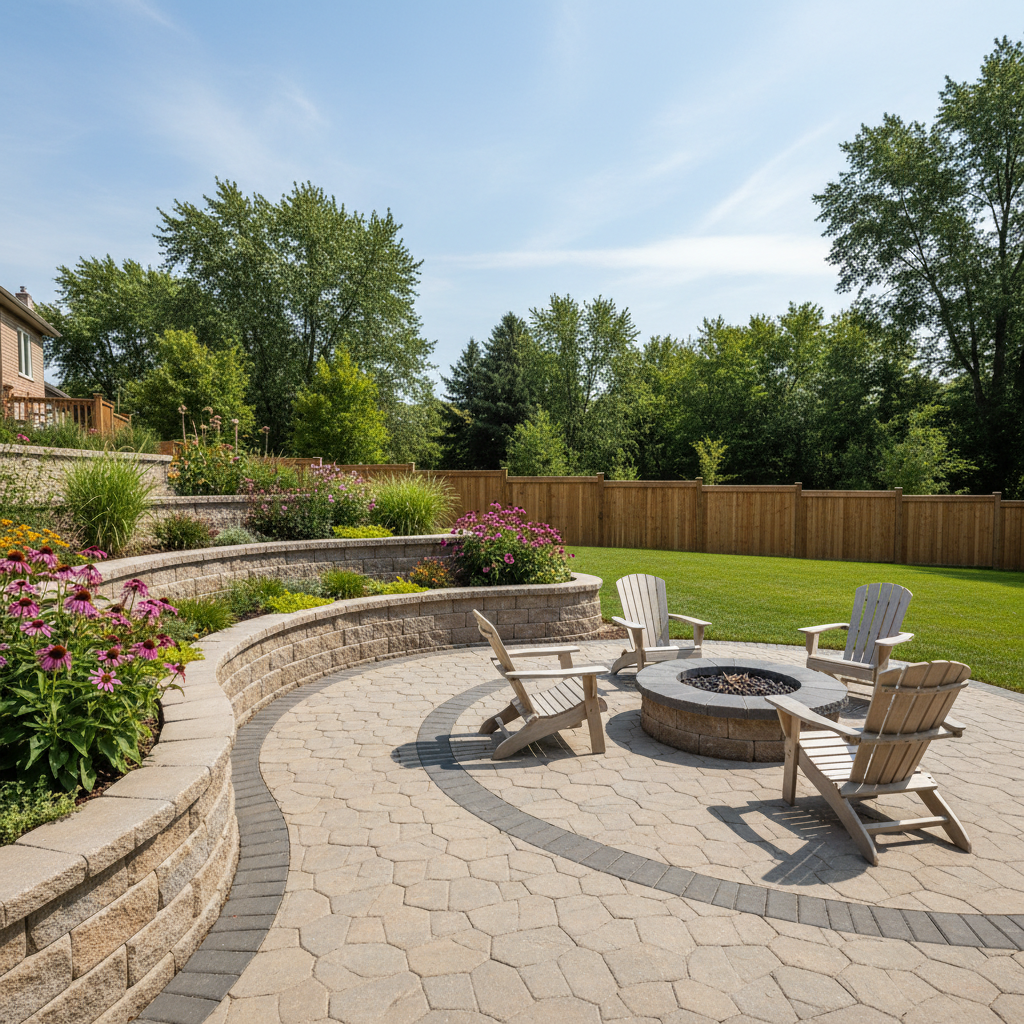
Retaining wall cost in Mississauga is driven by materials, wall height, access, drainage, and engineering—there’s no one-size price. From our Mississauga base on Matheson Blvd E, HR Greenroots Landscaping scopes your wall within a coordinated design-build plan to maximize longevity, curb appeal, and usable space while staying aligned to your investment goals.
By HR Greenroots Landscaping • Last updated: 2026-06-13
Hero Section
Choose a retaining wall that solves grading issues and looks great long term. We design and build walls with proper base, drainage, and reinforcement so they hold soil, channel water, and add usable space. Our Mississauga team integrates walls with patios, steps, and planting for a cohesive, low-maintenance yard.
Your wall should do more than hold soil—it should improve movement, create level zones, and anchor the whole landscape. Our end-to-end approach covers layout, base prep, block or stone selection, drainage, lighting conduits, and planting that finishes edges cleanly.
- Design-build clarity: One team plans and builds to spec, reducing rework.
- Durability-first construction: Proper excavation, compaction, and geogrid where needed.
- Maintenance-minded details: Defined edges, mulch lines, and accessible downspouts.
- Integrated features: Steps, seating, interlocking patios, and fence tie-ins.
At a Glance: Retaining Wall Budgets in Mississauga
Retaining wall budgets reflect five levers: material, height/length, drainage, access/soil conditions, and engineering/permits. Align those early, and you’ll avoid redesign costs and delays. We map these factors in a single plan so your wall, patio, and planting work together and last through Ontario freeze-thaw cycles.
- Materials: Segmental blocks, natural stone, or poured concrete change labor and complexity.
- Height + length: Taller and longer walls require more base, reinforcement, and time.
- Drainage: Drain tile, clean backfill, and outlets protect walls from hydrostatic pressure.
- Site & access: Tight lots, clay soils, tree roots, and utilities all affect workflow.
- Engineering & permits: Reviews, stamps, and inspections can be required based on height and location.
For a deeper dive into design choices, see our retaining wall design guide, or explore how walls fit into broader yard planning in our landscape design-build overview.
Local considerations for Mississauga
- Plan staging around neighborhood traffic near Saigon Park; limited curb space can affect delivery sequencing.
- Schedule excavation and compaction before consistent freeze; shoulder seasons reduce soil moisture risk in the Regional Municipality of Peel.
- When working near Lambton College area housing, coordinate work hours and access paths to protect adjacent sidewalks and turf.
Introduction: What “cost” really means for a retaining wall
“How much does a retaining wall cost in Mississauga?” translates to “What drives the investment?” Cost is the output of design choices, soil conditions, access, and compliance. We show you the trade-offs up front so you can match performance and look with realistic expectations—without surprise change orders.
We’ve found the right conversation isn’t about a one-line number—it’s about performance targets. Do you need vehicle-rated support? A tiered garden backdrop? A property line solution that ties into fencing? Each answer sets specifications that shape labor, logistics, and sequencing.
- Performance first: Define soil retention, loading, and usable space goals.
- Integration: Coordinate patios, steps, walkways, and planting to avoid duplicate excavation.
- Resilience: Engineer for Ontario’s freeze-thaw, typical block heights of 4–8 inches, and geogrid spacing every 2–3 courses where required.
To see how we bundle site solutions under one roof, browse our landscaping services in Mississauga.
Services Offered: Walls that work with your whole landscape
We design and build segmental block, armor stone, and concrete retaining walls—then tie them into interlocking patios, steps, and beds. Strong base prep, edge control, and drainage are standard. Finishes include caps, lighting conduits, and planting that delivers clean, low-maintenance edges.
Wall types we build
- Segmental block walls: Engineered systems with pin or lip connections; modular heights and caps; curves and steps are easier to integrate.
- Armor stone features: Natural boulders or squared stone for a rugged, timeless look; great for tiered beds and informal seating edges.
- Poured concrete or concrete sleepers: Sleek lines and high-load areas; requires formwork, reinforcement, and drainage to relieve pressure.
Integrated hardscape and planting
- Interlocking & pavers: Patios, walkways, and pool surrounds that align elevations with your wall caps.
- Stairs and landings: Safe rises and runs; typical step risers 6–7.5 inches for comfortable use.
- Beds and edging: Mulch and defined garden edges reduce cleanup and protect base from erosion.
Property managers and owners needing slope correction can review our Mississauga slope correction guide for typical reinforcement patterns and access planning.
The Process: Step-by-step retaining wall build
A durable wall starts with accurate layout, excavation to the correct base depth, and compacted aggregate. We install drain tile, clean backfill, and geogrid as specified. Each course is leveled and aligned, caps are secured, and final grading directs water away from structures.
- Site assessment: Measure grades, utilities, and access; flag downspouts and overland flow paths.
- Layout & excavation: Dig to base depth (often 6–12 inches below grade) with a level trench wider than the block.
- Base prep: Install compacted 3/4-inch crushed stone in lifts; check string lines and laser levels each pass.
- First course: Set perfectly level; this controls the whole wall.
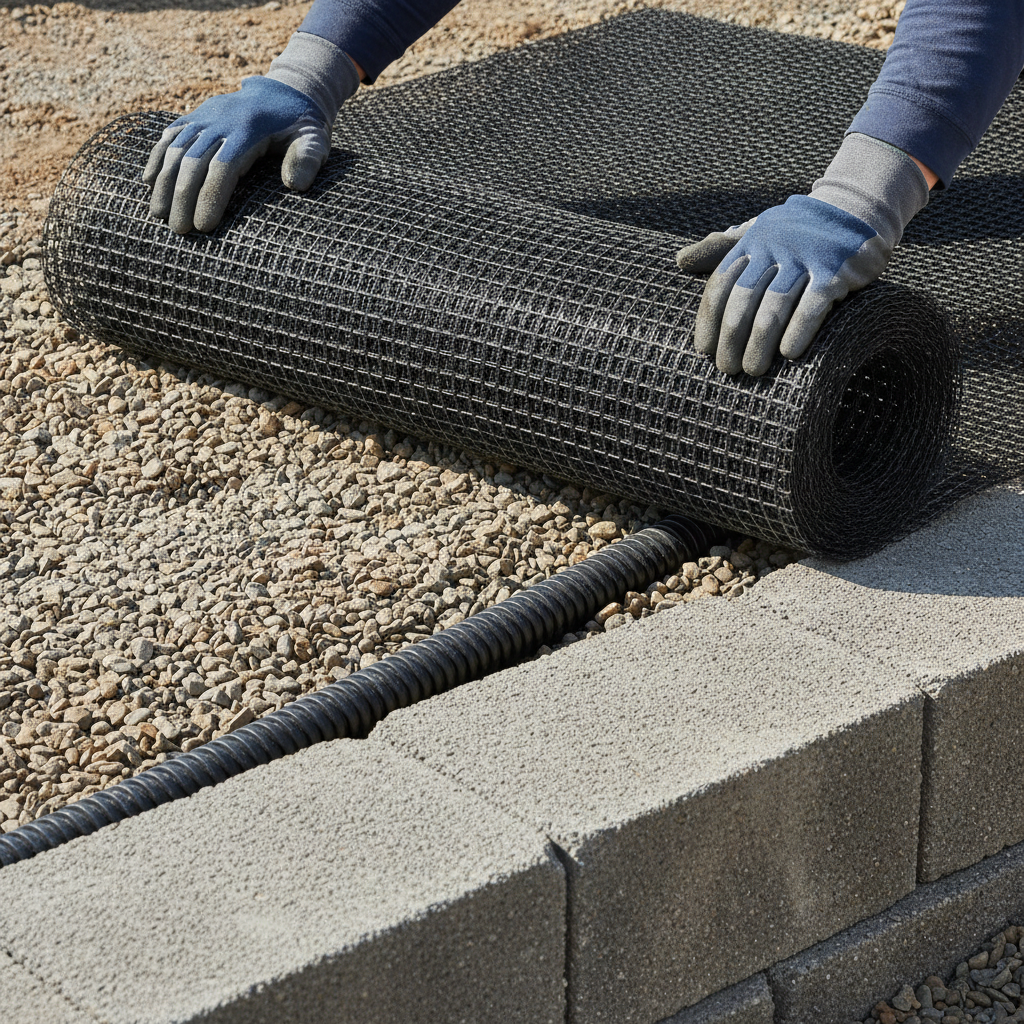
- Drainage & backfill: Place perforated drain tile, wrap with clean gravel, and provide an outlet to daylight or a storm path.
- Reinforcement: Add geogrid at engineered intervals (commonly every 2–3 courses) with proper embedment length.
- Build up courses: Stagger joints, check batter, and keep faces clean.
- Cap & finish: Adhere caps, install steps/landings, grade topsoil, and mulch beds.
See how base, drain tile, and geogrid interact during construction:
For a broader plan that aligns patios, driveways, and beds with the wall, explore our design-build approach.
Pricing: What really drives your retaining wall investment
Retaining wall pricing reflects design choices and site conditions—not a flat rate. Materials, height and length, drainage complexity, access limits, and engineering/permit needs set timelines and crews. Align these early to prevent redesigns and keep installation efficient and predictable.
Key cost drivers (no numbers, just what to plan for)
- Material system: Segmental blocks simplify curves and steps; armor stone favors natural looks; poured concrete suits tight sites demanding straight lines.
- Height/length: More courses mean deeper base, added geogrid, and longer build windows.
- Drainage package: Continuous perforated pipe, 3/4-inch clear stone backfill, and daylight outlets reduce hydrostatic pressure.
- Access & soil: Narrow side yards, heavy clay, or saturated soil slow excavation and compaction.
- Engineering & permits: Taller walls or proximity to property lines and structures can trigger review requirements.
Material comparison (performance and maintenance)
Material Best Use Durability Maintenance Segmental Block Curves, steps, seating caps High with geogrid and drain Low; occasional joint cleaning Armor Stone Natural, tiered beds, large stones High mass; great for informal looks Very low; settle-check after winter Poured Concrete Straight runs, tight access forms High with steel and drains Low; crack control and sealingFor practical base and layout tips that align with interlock and walkway planning, see this walkway base advice. For broader backyard layout inspiration, browse landscape idea examples and Ajax backyard transformations.
Why Choose Us: Build once, build right
We combine design, build, and maintenance thinking so your wall is strong on day one and easy to care for after. Strong base prep, grading, and edge control anchor our work. Clients across Mississauga rate us highly for reliability, clean sites, and on-time delivery.
- End-to-end delivery: One accountable team from concept to caps means fewer delays.
- Base and grading excellence: Compaction checks, clean edge definition, and water management built in.
- Ontario-specific planting: Layered plants for four-season interest at the wall’s top and toe.
- Verified satisfaction: A consistently high client rating reflects dependable schedules and tidy turnarounds.
See how retaining walls integrate with our other landscaping services in Mississauga, or go straight to our retaining wall service page to outline your goals.
Request a site assessment
Ready to define scope, access, and drainage in one visit? Book a coordinated review through our retaining wall service and we’ll map a build plan that fits your property.
Service Area: Mississauga and the Regional Municipality of Peel
We design and build retaining walls across Mississauga and the Regional Municipality of Peel, with quick access from our Matheson Blvd E location. Our mobile crews also serve GTA cities where slope, access, and water management need cohesive, code-aware solutions.
- Primary: Mississauga neighborhoods and nearby Peel communities.
- GTA reach: Toronto, North York, Etobicoke, and Richmond Hill for full design-build projects.
- Property types: Residences, small businesses, and larger complexes with coordinated site logistics.
Property managers can learn how we schedule multi-zone work in our property manager services overview.
Testimonials: Results clients notice
Clients highlight clean site management, tight scheduling, and walls that tie into patios and beds seamlessly. A high average rating reflects consistent outcomes and communication. The goal is simple: one well-planned build that looks intentional and stays that way.
- Reliable timelines: Sequenced crews minimize downtime between excavation, base, courses, and caps.
- Crafted details: Level first courses, tight joints, and neat cap lines.
- Aftercare tips: Seasonal checks on outlets, mulch top-ups, and cap sealant guidance.
We treat every project as part of a connected system—walls, patios, beds, and water all working together.
Frequently Asked Questions
Homeowners ask about permits, wall height, timelines, and drainage. The short version: plan before you dig, use the right materials and reinforcement, and give water an easy path out. Here are concise answers to the most common questions we receive.
Do I need a permit for a retaining wall?
Permit requirements depend on wall height, location, and proximity to property lines or structures. When heights or loads exceed thresholds, engineering review can be required. We help you confirm local rules and coordinate drawings if a building permit or review is needed.
What’s the best retaining wall material for Ontario winters?
Segmental block systems and armor stone both perform well in freeze-thaw when built on a compacted aggregate base with drain tile and clean backfill. Caps, sealed joints, and correct geogrid spacing help resist movement from frost and water pressure.
How long does a typical residential wall take to build?
Most single-run residential walls install over several working days once excavation starts. Factors include length, height, access, and weather. Walls with stairs, landings, and integrated patios require added time for subgrade prep and precise alignment.
How do you manage drainage if my yard has heavy clay soil?
We use perforated drain tile at the base, wrap it in clean stone, and create an outlet to daylight or a designated storm path. We also backfill the wall with clear stone to reduce water pressure and grade the surface to direct runoff away from structures.
Key Takeaways
Set performance goals first, then choose materials and details to match. Plan for drainage, reinforcement, and access early to protect your budget and schedule. Integrate walls with patios and planting to get a cohesive, low-maintenance yard that feels intentional.
- Retaining wall cost in Mississauga reflects design, drainage, and access—align them early.
- Segmental block, armor stone, and concrete each trade looks for build complexity.
- Drain tile, clean backfill, and geogrid spacing every 2–3 courses are common durability keys.
- Coordinate patios, steps, and beds to avoid duplicate excavation and speed timelines.
Final CTA: Start with a coordinated site review
Book a site visit in Mississauga to align goals, access, and drainage in one plan. We’ll recommend the right retaining wall system, outline sequencing, and integrate patios, steps, and beds so you build once and enjoy for years.
Tell us where you need support—parking pad edges, backyard terraces, or a front entry rise—and we’ll map a precise, buildable plan. Start here: request a retaining wall assessment.


