Stone landscaping features for curb appeal: what to choose, where to place them, and how to make them last
Well-placed stone can transform a front yard from “fine” to “finished.” The right materials and layout add definition, guide movement, and set a welcoming tone from the street. This guide explains which stone landscaping features for curb appeal deliver the most visible payoff, how to position them for balance and usability, and the fundamentals that keep them looking crisp over time.
Why stone works for curb appeal
Stone brings structure, texture, and contrast that lawns and planting alone can’t provide. It frames views, strengthens edges, and adds permanence without demanding daily attention. Whether you prefer clean modern lines or a naturalistic look, stone is versatile enough to match most architectural styles and planting palettes.
- Definition: stone edges, steps, and walls create clean boundaries that make planting and lawn areas feel intentional.
- Circulation: pathways and stoops establish obvious, comfortable routes to the door.
- Durability: quality base preparation and proper grading help stone installations resist shifting and seasonal wear.
- Low-maintenance polish: once installed correctly, stone needs relatively little care compared with other finishes.
Top stone features by impact
To maximize first-glance appeal, prioritize features that touch your front approach, driveway, and property edges. These are the surfaces people see and use most.
-
Front walkway with defined edges
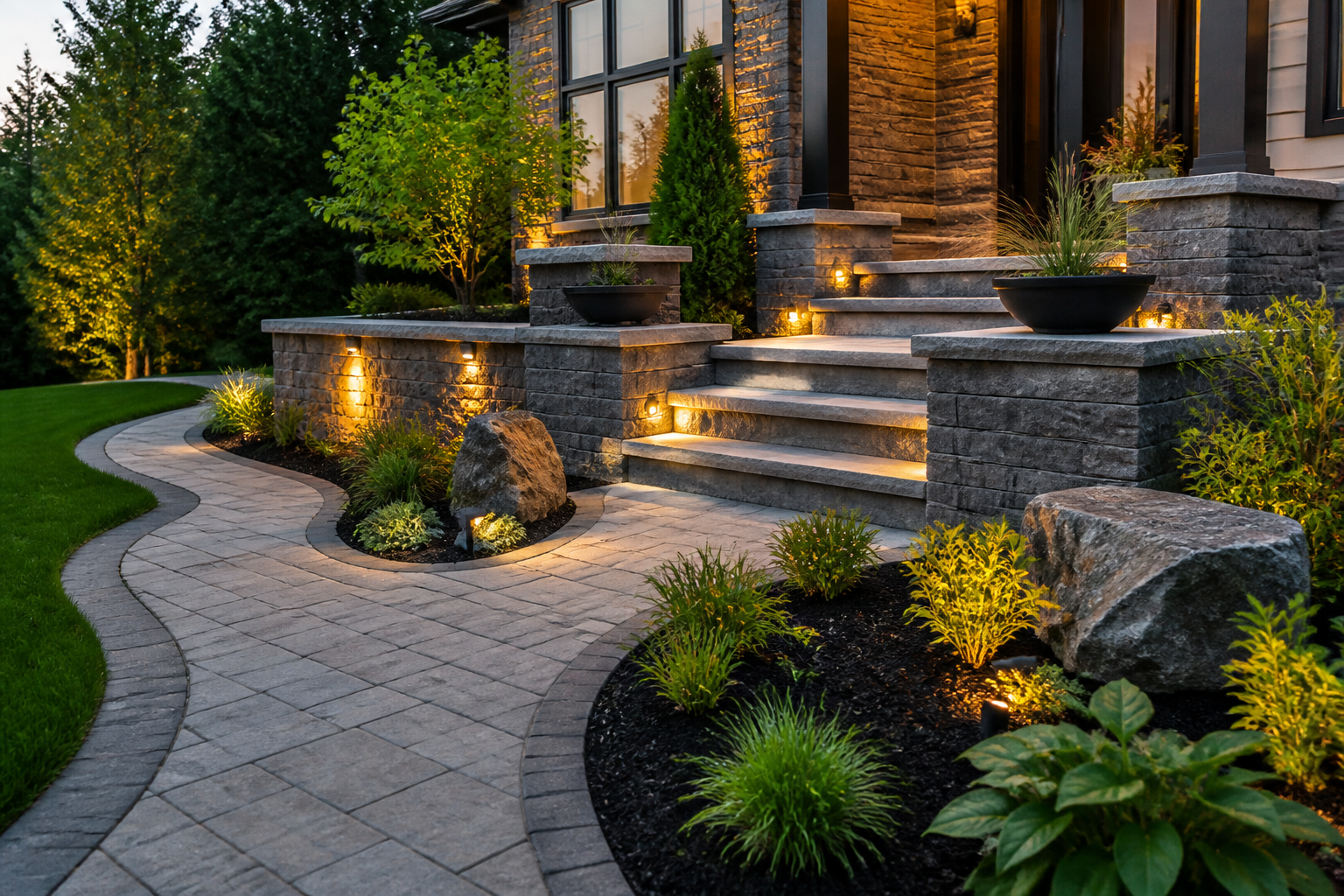
A stone walkway sets the tone from the sidewalk or driveway to the entry. Straight runs feel formal and efficient; gentle curves create a softer, inviting approach. Add crisp edging to prevent lawn creep and to keep joints tidy.
-
Entry steps and stoop
Stone steps and a solid stoop create a graceful threshold. A slightly deeper top landing allows comfortable door operation and space for seasonal planters or a bench.
-
Driveway borders and aprons
Framing asphalt or concrete with stone borders, or adding a stone apron at the street side, provides an immediate “finished” look and can visually widen the drive.
-
Retaining walls and seat walls
Where grades change, stone walls prevent soil migration and add layered interest. Low seat walls double as casual seating near the entry or along walkways.
-
Pillars, address markers, and mailbox bases
Compact vertical elements draw the eye and help with wayfinding. A stone pillar with house numbers near the drive approach increases visibility and presence.
-
Garden borders and raised beds
Stone edging or small raised planters tidy up planting lines and simplify mowing and mulch containment.
-
Feature boulders and armour stone accents
Strategic single stones or grouped pieces anchor a bed and introduce natural texture without overcomplicating the design.
Choosing stone types and formats
The “right” stone is the one that suits your house style, complements your exterior finishes, and fits the level of maintenance you want. Use this quick filter to narrow options:
- Texture: Smooth pavers and sawn steps read contemporary and clean; split-face or tumbled blocks feel rustic and relaxed.
- Colour: Pull a dominant or accent hue from the roof, siding, or trim. Neutral greys and charcoals are versatile; tans and creams warm up brick or stucco.
- Format: Large-format slabs create broader, calmer surfaces with fewer joints; smaller units introduce pattern and visual energy.
- Edge detail: Chamfered, beveled, or rough-hewn edges each send a different design signal—match the edge profile to your home’s vibe.
If you’re comparing patterns for a walkway or stoop, sample a few options dry-laid on site. Step back to the street and assess which one aligns with your facade and front planting.
Placement rules that make stone look designed
Good placement is what separates “nice material” from “great curb appeal.” Use these rules to guide layout and proportions:
- Scale to the facade: A narrow path to a wide door looks pinched. Aim for a walkway width that feels generous—especially near the stoop—so two people can pass comfortably.
- Soften transitions: Where hardscape meets planting, use curved bed lines or staggered shrubs to avoid rigid, “strip-like” borders unless modern minimalism is the goal.
- Sequence the approach: From the curb, the eye should read: apron or drive edge → primary path → landing → front door. Keep this sequence clear to avoid visual noise.
- Use repetition: Repeat a stone colour or edge detail on the stoop, pillar cap, and planter coping so the front yard feels cohesive.
- Mind sightlines: Position low walls or pillar features so they frame—rather than block—views to the entry and street.
Base prep, grading, and drainage
Most long-term issues with stone surfaces trace back to what sits beneath them. Before you think pattern, think base. While the exact build-up varies by product and site, a durable installation typically involves:
- Excavation to remove organics and reach stable subgrade.
- Placement and compaction of appropriate base materials in consistent lifts.
- Accurate grading to direct water away from structures and walking surfaces.
- Edge restraint that holds pavers or slabs in place at the perimeter.
- Jointing material suitable for the product and climate.
For broader construction context, you can review general construction planning considerations from an external resource such as general construction planning considerations.
Low-maintenance design tactics
If you want curb appeal without constant touch-ups, design with maintenance in mind from day one:
- Favor larger paver/slab formats on walkways to reduce joint count.
- Specify defined edging between lawn and beds to stop grass encroachment.
- Choose raised stone planters for tidy, contained displays near the entry.
- Use landing spaces that accommodate pots or a bench without crowding the door.
- Integrate low-voltage lighting into step risers or wall caps for safe, subtle illumination.
Front yard stone layouts that work
Consider these proven arrangements when planning your front approach and edges:
- Linear modern: A straight stone path, wide stoop slab, and crisp driveway border, repeated in the pillar cap and mailbox base.
- Soft transitional: A gently curving walkway with tumbled stone edges, low seat wall near the landing, and a boulder grouping in a mixed shrub bed.
- Compact frontage: A widened stoop that doubles as a small patio, flanked by two raised stone planters to add presence without extensive hardscape.
Budgeting your visual impact
Even without line-item numbers, you can stage upgrades to concentrate visual returns in the right order:
- Fix the approach (walkway and stoop). These surfaces shape every first impression.
- Frame the drive with a border or apron to make the frontage feel complete.
- Add vertical punctuation with a pillar, address marker, or short wall near the entry zone.
- Finish edges with stone borders and a couple of well-placed feature boulders.
Smart planting to partner with stone
Stone looks best when it’s not doing all the work. Pair it with structured, low-upkeep planting:
- Evergreen backbone near the entry so the facade reads well year-round.
- Layered heights: low groundcovers at edges, medium shrubs behind, and a single small tree or multi-stem near the corner.
- Seasonal accent near the stoop—one raised planter can be enough to signal care without clutter.
Maintenance essentials
Stone is durable, but it still benefits from a quick annual routine:
- Inspect joints and edge restraints after freeze-thaw seasons.
- Top up jointing material where needed and clean surface stains promptly.
- Keep bed edges clear of soil and mulch spillover to preserve clean lines.
- Trim plantings to maintain sightlines to the entry and address markers.
Common mistakes to avoid
- Walkways too narrow for two people to pass comfortably.
- Busy pattern mixes between drive, path, and stoop with no repeated element.
- Skipping proper base prep and grading, which invites shifting and pooling.
- Planting that hides the house numbers or crowds step edges.
- Forgetting a landing deep enough for safe door clearance and decor.
Quick questions to finalize your plan
- What is the one view you want to impress most: the street, the driveway approach, or the front door moment?
- Which stone detail will you repeat across two or more elements for cohesion?
- Where should lighting live so the path and step edges read clearly at night?
- How will you separate lawn from beds to keep edges clean year-round?
FAQ
Which stone landscaping features for curb appeal should I start with first?
Start where eyes and feet go: the front walkway and stoop. They shape the arrival experience and are visible from the curb. Next, consider driveway borders or an apron to “frame” the frontage, then add a low wall or pillar as a focal point.
How wide should a front stone walkway be?
Choose a width that allows two people to pass comfortably, and widen near the stoop to prevent crowding at the door. If the facade is broad or the front door is centered, a more generous path feels proportional and intentional.
What’s the simplest way to keep stone edges looking tidy?
Use defined edging or coping between hardscape and planting, prevent lawn creep with a stable border, and top up jointing material if it settles. Keep mulch pulled slightly back from stone faces to avoid stains and blurred lines.
Useful next reads and resources
- Explore curb-boosting stone work ideas with real-world layouts
- Review a stone work services overview for planning your project