
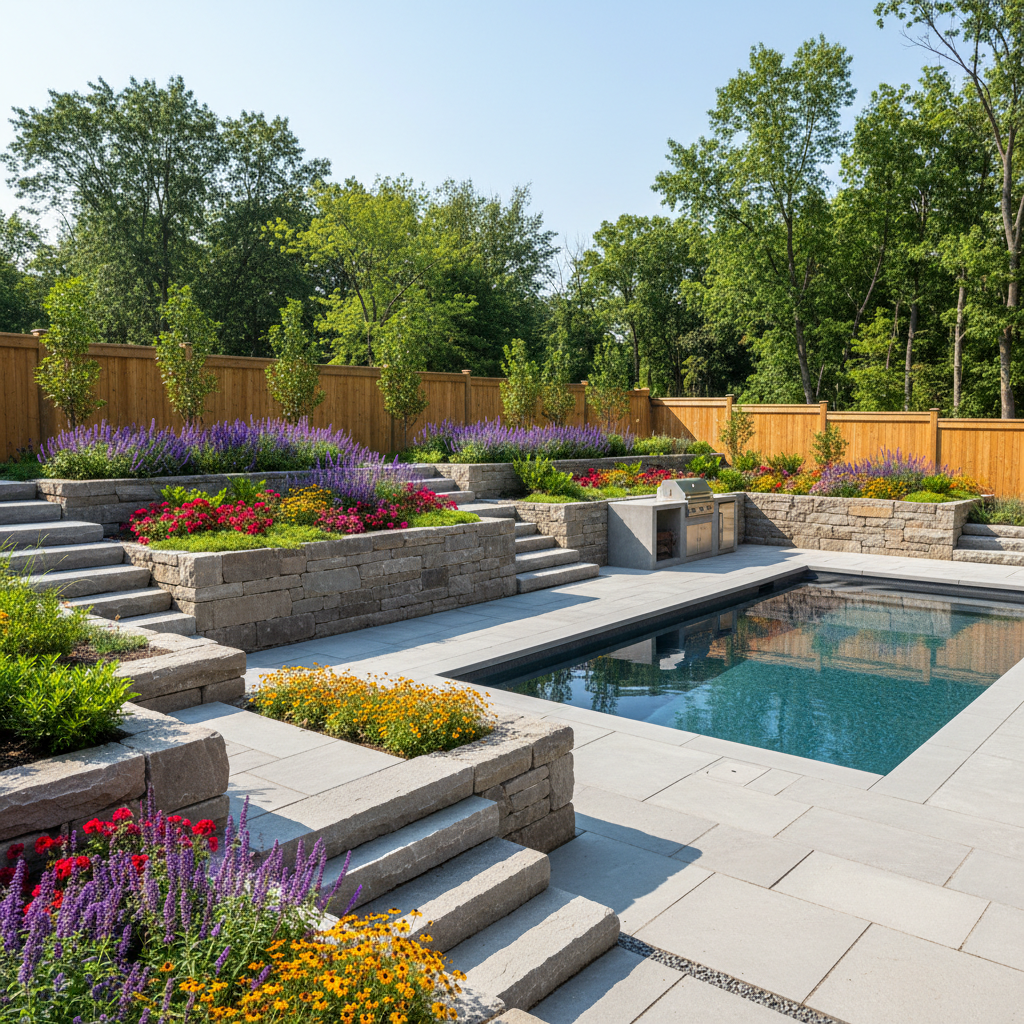
Armour stone features are natural, large-format stones used to build retaining walls, steps, seating, borders, and focal accents. Their mass resists soil pressure and freeze–thaw cycles, while textured faces deliver a timeless, upscale look. For Mississauga yards, armour stone combines durability with curb appeal across sloped sites, pool areas, and high-traffic edges.
By HR Greenroots Landscaping — Last updated: April 19, 2026
At a Glance: What You’ll Learn
This guide explains what armour stone is, why it matters in Ontario’s climate, and how it’s designed, installed, and maintained. You’ll see real-world applications, a step-by-step build process, best practices for drainage and base prep, a comparison with concrete block systems, local Mississauga tips, mini case studies, tools, and FAQs.
Here’s the short version before we dive deep.
- Definition and use cases for modern Mississauga and GTA yards
- Engineering basics: base prep, drainage, and frost management
- Stone types (limestone, granite, dolostone) and how to choose
- Applications: retaining, steps, edging, seating, water/fire features
- Pro installation workflow and quality checks you can verify on-site
- Maintenance tips to keep edges crisp and planting beds healthy
- Local considerations for Mississauga properties and schedules
What Is Armour Stone?
Armour stone is quarried, large-format natural stone—often limestone or granite—used for retaining walls, steps, edging, and landscape accents. Its weight and split-face texture offer structural stability and a premium look, making it ideal for sloped yards, pool surrounds, and high-wear edges in Mississauga and the GTA.
In plain terms, armour stone is the heavy-duty, natural alternative to manufactured blocks. Pieces are typically rectangular or irregular, with faces showing split, weathered texture. Individual stones commonly range from 12 to 48 inches wide and may weigh hundreds of pounds each.
Where it shines
- Retaining and terracing: Holds back soil on slopes, creates level patios, and defines garden tiers.
- Steps and landings: Broad treads with stable risers for safe foot traffic.
- Edging and borders: Durable borders around mulch beds and lawn transitions.
- Seating and fire features: Informal benches and seat walls for social zones.
- Water features: Natural cascades, spillways, and pond framing.
For homeowners who want a cohesive result, HR Greenroots integrates armour stone with landscape design, interlocking & pavers, retaining walls, stone work, and mulching & beds so circulation, planting depth, and drainage work as a system.
Why Armour Stone Matters in Mississauga
Armour stone matters because it pairs structural mass with low maintenance, resisting Ontario’s freeze–thaw cycles and heavy rains. It stabilizes slopes, protects foundations, and elevates curb appeal. In Mississauga, it’s a reliable choice where drainage, snow loads, and seasonal shifts demand durable, well-drained hardscape edges.
Mississauga properties face rainfall spikes, spring thaw, and winter freeze that can heave lighter materials. Large stones, properly bedded and drained, distribute loads and reduce movement. That’s why we often pair armour stone with grading adjustments, French drains, or perforated pipe behind walls to manage groundwater.
Problems it solves
- Grade changes: Turn slopes into usable patios, play areas, or garden tiers.
- Lawn erosion: Stop washouts at downspouts and low corners.
- Messy edges: Create clean transitions around beds, driveways, and pathways.
- Privacy and zoning: Seat walls and level changes define social zones without fences.
Local considerations for Mississauga
- Schedule earthwork and wall builds during frost-free windows for stable compaction and clean edges.
- Plan drainage for snowmelt and spring rain; keep outlets clear of ice or mulch blockages.
- Choose stones and plants that complement salt exposure and plow splash near driveways.
How Armour Stone Works (Engineering Basics)
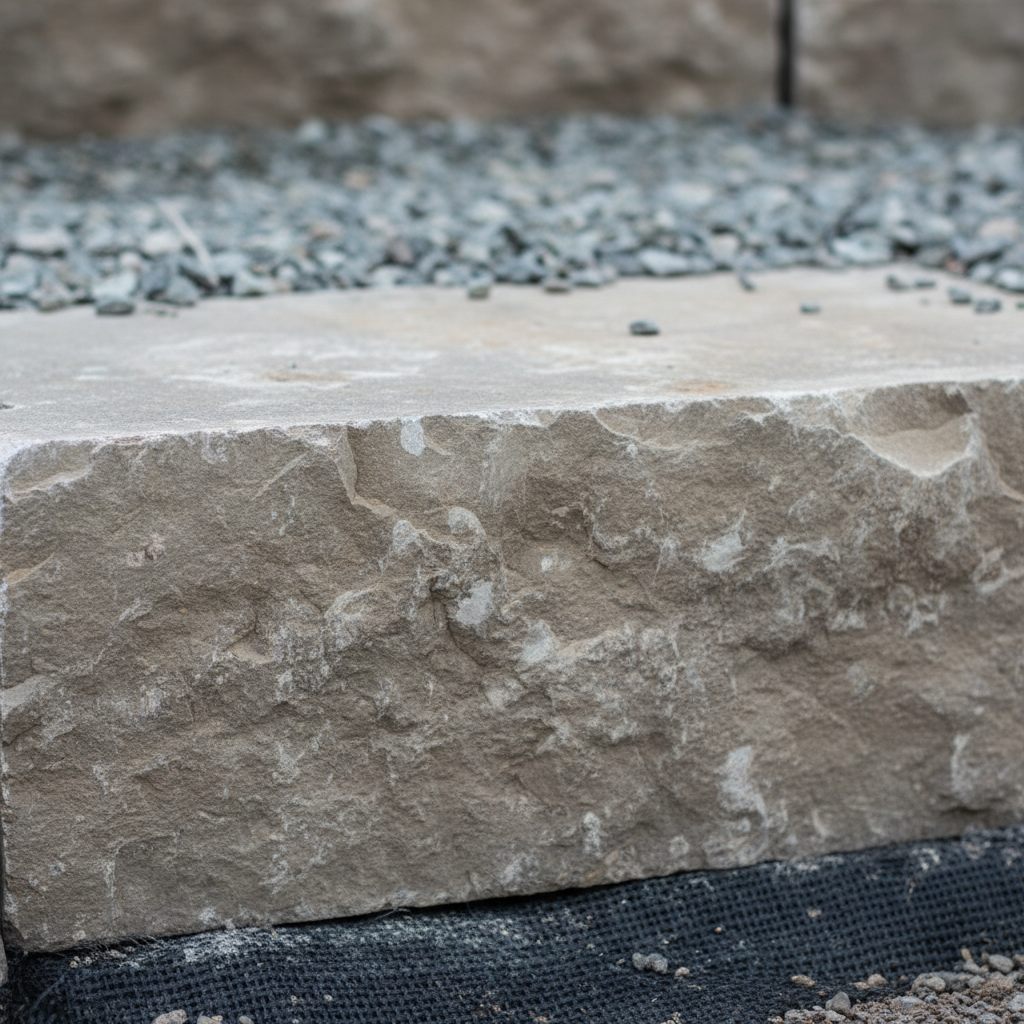
Armour stone walls rely on mass, level bedding, and drainage. A compacted granular base supports each course. Geotextile separates soil from stone. Free-draining backfill and weep points relieve water pressure. When built level with proper set-back, the wall resists sliding, overturning, and frost heave.
Think of every stone as a miniature gravity block. When the base is flat, compacted, and extended beyond the wall’s toe, loads spread evenly. Free-draining backfill (clear 3/4-inch gravel) behind the wall, plus a separation fabric, stops fines from clogging. Where needed, perforated pipe daylighted at grade moves water out of the system.
Base, drainage, and fabric—your three essentials
- Base course: Dense-graded aggregate compacted in lifts creates a uniform platform for the first stones.
- Geotextile: A non-woven fabric isolates native soils from wall stone and gravel to prevent contamination.
- Back drainage: Clear stone backfill, weep gaps, or a perforated pipe reduce hydrostatic pressure.
On sites with heavy clay, we increase drainage capacity and consider modest wall batter (set-back per course) to improve stability. For high surcharge zones near driveways or sheds, we evaluate loads and, if needed, step up to deeper stones or engineered details.
Types of Armour Stone and Design Approaches
Armour stone typically comes in limestone, granite, or dolostone with split, natural, or sawn faces. Choose stone by color, texture, and strength. Combine straight runs with stepped corners and oversized cap stones to create retaining tiers, steps, seating, and edges that look intentional and cohesive.
Not all stones are visually—or structurally—the same. We help you balance look, availability, and performance, especially when tying into pavers, decks, or fences.
Common materials
- Limestone: Widely available in Southern Ontario with light grays and beiges; excellent for walls and steps.
- Granite: Hard, dense, and darker—great for high-wear edges and premium contrasts.
- Dolostone: Similar to limestone but with increased durability; a solid all-rounder.
Finishes and shapes
- Split-face: Natural, textured faces that blend with plantings.
- Sawn tops: Flatter treads for steps and cap stones with clean walking surfaces.
- Irregular boulders: Accent pieces for water features and informal seating.
Design moves we use
- Tiered walls: Terraces split grade changes into shorter, safer rises.
- Integrated steps: Wide, stable treads aligned with primary foot traffic.
- Seat-height caps: 17–19 inches finished height gives comfortable casual seating.
- Edge alignment: Crisp edges where stone meets sod, mulch, or pavers for easy mowing and cleanup.
Because HR Greenroots is an integrated design–build team, we coordinate stone selection with interlocking & pavers, fence installation, deck services, and garden shed installation so everything reads as one project.
Installation Best Practices We Follow
The best armour stone builds start with right-sized excavation, compacted granular base, level placement, and clean drainage paths. We set the first course perfectly, stagger joints, anchor steps into the grade, and finish with geotextile, backfill, and caps for tight, low-maintenance edges.
In our experience, 80% of wall performance is won or lost in the first course. We laser-level the trench, overbuild the base by several inches beyond the wall toe, and check each stone for pitch. Steps are keyed into grade and receive non-slip caps where foot traffic is high.
Step-by-step process (field-proven)
- Layout and locates: Mark wall alignment and confirm utility locates before digging.
- Excavate and shape: Dig to design depth and create a flat, compactable trench.
- Base placement: Install dense-graded aggregate in lifts; compact to a firm, level platform.
- Set first stones: Place largest stones; check level front-to-back and side-to-side.
- Drainage layer: Add geotextile, then free-draining gravel; include weep path or pipe if designed.
- Build courses: Stagger joints; maintain batter where specified; tie corners cleanly.
- Steps and caps: Fit sawn treads; ensure comfortable rise/run and secure seating heights.
- Backfill and finish: Backfill in lifts; restore grades; edge transitions to sod, mulch, or pavers.
Applications and Layout Ideas for Your Yard
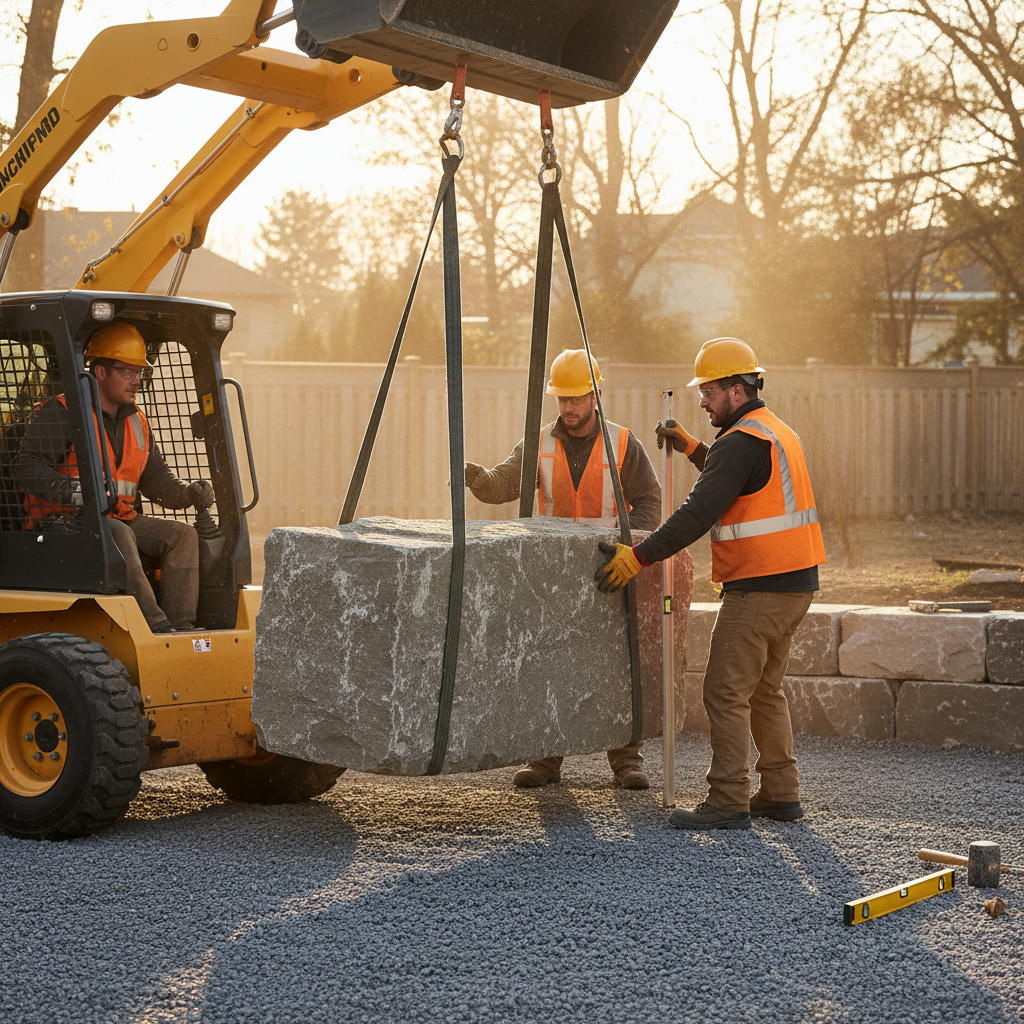
Use armour stone to terrace slopes, frame patios, build steps, and create seat walls, fire edges, and water features. Pair natural stone with interlocking pavers and planting beds for contrast and clean maintenance. Plan edges and access early so mowing, snow clearing, and drainage stay effortless.
High-impact uses
- Retaining terraces: Lower rises reduce perceived height and maintenance risk.
- Wide steps: 48–60-inch treads feel generous and safer for families.
- Patio borders: Seat-height caps double as extra seating for gatherings.
- Downspout basins: Stone-lined basins control splash and erosion at roof drains.
- Pond edges and rills: Natural cascades soften sound and create habitat.
Pairings that work
- Interlocking patios: Armour stone seat walls around a paver patio add function and texture.
- Decks and stairs: Natural stone steps transition smoothly from deck landings to grade.
- Fences and sheds: Seat-height walls provide perch points and tidy the footprint.
- Sod and mulch: Clean stone–sod edges speed mowing and reduce string trimming.
Need ideas tailored to your space? Our landscape design team can evaluate grades, movement lines, and planting depth to map a right-sized plan.
Armour Stone vs. Segmental Concrete Block
Choose armour stone for natural aesthetics, mass, and fewer units to place. Pick segmental block for modular geometry, taller engineered walls, or tight radii. Both require proper base, drainage, and backfill. Your site’s loads, curves, and style preferences determine the best fit.
Factor Armour Stone Segmental Block Look Natural, split-face texture; rustic to upscale Uniform, modular; many face options Units Large, fewer pieces to place Smaller, more pieces; precise geometry Curves Gentle radii, stepped corners Tighter radii possible with wedges Engineering Great for low-to-mid walls; mass-dominant Excellent for engineered tall walls Maintenance Low when properly drained Low when properly drainedMaintenance, Safety, and Longevity
Well-built armour stone needs minimal maintenance: keep weep paths open, avoid soil buildup behind walls, and refresh joints or caps if settlement occurs. Inspect annually after freeze–thaw season. Keep walkable surfaces non-slip and step risers consistent for safe use.
Our maintenance-first mindset guides design. We specify mowing strips where lawns meet walls, protect downspout outlets, and use plantings that won’t overrun edges. Annual checks keep everything tight and drain lines clear. If you ever see settlement or ponding, address it early to prevent compounding issues.
Tools, Materials, and Helpful Resources
Successful projects use proper compaction tools, geotextile, free-draining backfill, and safe handling gear. Plan utility locates, access paths for equipment, and spoil management. Reference installation guides and local permitting rules for walls near property lines, structures, or public ways.
What we bring to site
- Excavator or skid steer with lifting straps and rated hooks
- Plate compactor and rammers for dense, even bases
- Laser level, stringlines, and square for layout precision
- Non-woven geotextile, clear stone backfill, and dense-graded base aggregate
- Sawn cap stones or tread stones for steps and seat walls
Want a coordinated install? We tie stone work into interlocking patios, walkways, and driveway extensions so grades, edges, and planting beds work together.
Mini Case Studies: Mississauga & GTA
These quick snapshots show how armour stone solves real problems: converting slopes into usable space, protecting edges near driveways, and creating family-friendly steps. Each project pairs base prep, drainage, and clean finishing for results that look intentional from day one.
1) Sloped backyard to two-tier patio
- Two low terraces with integrated steps resolve a 36-inch grade drop.
- Seat-height caps add flexible seating around a paver patio.
- Drainage stone and geotextile behind the wall prevent fines migration.
2) Driveway edge protection
- Armour stone border absorbs plow splash and protects fresh sod.
- Weeping path directs meltwater away from the driveway.
- Edge alignment simplifies mowing and snow clearing.
3) Family steps and landing
- Wide treads with consistent risers improve safety and everyday comfort.
- Non-slip cap stones provide secure footing in wet conditions.
- Adjacent beds use mulch and low shrubs for low care and year-round interest.
Free Site Assessment: Mississauga & GTA
Considering armour stone features for your yard? Book a walk-through with our HR Greenroots team. We’ll review grades, access, and options for a right-sized, phased plan.
Frequently Asked Questions
Homeowners ask about wall height, permits, winter care, and pairing stone with patios or decks. In short: confirm local rules, build on proper base with drainage, and integrate edges with pavers, sod, or mulch. Annual checkups after thaw keep everything set and safe for years.
How tall can an armour stone wall be without engineering?
It depends on local bylaws and site conditions. Many low residential walls are designed as gravity structures, but once you approach mid-height walls, surcharge loads, or proximity to structures, formal engineering may be required. Always confirm municipal rules before building.
Do I need drainage behind the wall?
Yes. Free-draining backfill and a separation fabric help prevent hydrostatic pressure and soil contamination. We often include a perforated drain pipe that exits (daylights) at grade, especially on clay soils or longer walls.
What stone type is best for steps?
We typically recommend dense limestone or granite with sawn tops for a flatter tread. The choice comes down to look, availability, and how the color pairs with nearby pavers, fences, or siding.
How do armour stone features pair with paver patios?
Very well. We coordinate base prep and drainage across both, align finished heights for smooth transitions, and use seat-height caps to add casual seating around the patio edge. Clean edges reduce ongoing maintenance.
Key Takeaways
Armour stone delivers mass, durability, and natural texture ideal for Mississauga yards. When paired with proper base, drainage, and coordinated design, it solves slopes, adds seating, and elevates curb appeal with minimal maintenance over time.
- Big gains come from a level first course, clean drainage, and fabric separation.
- Choose stone type and finish to match nearby materials and long-term care.
- Integrate with patios, decks, fences, and planting for a cohesive result.
- Plan annual post-thaw checks to keep edges tight and safe.
Related Landscape Ideas
If you like armour stone, consider companion projects that complete the space: paver patios, wide walkways, privacy fencing, and organized planting beds. Together, these upgrades streamline maintenance and make everyday outdoor use easier and more enjoyable.
- Interlocking patio with seat walls and lighting
- Wide front walk with integrated steps and rail-ready treads
- Driveway extension framed by armour stone edging
- Mulch refresh and defined garden beds for low upkeep


