

Garden suites in Mississauga are small, self-contained dwellings built in a backyard to create flexible living space for family or rental. They pair zoning-compliant design with smart site planning and landscaping, so access, drainage, privacy, and usability work from day one. Based in Mississauga, our design-build team integrates the suite with interlocking, grading, and planting.
By HR Greenroots Landscaping • Last updated: 2026-04-29
Quick Summary and Table of Contents
A garden suite is a detached accessory dwelling in your backyard. In Mississauga, success relies on aligning pre-approved plans or custom design with access, utilities, grading, and landscaping. This guide explains what they are, why they matter, how approvals and construction work, and how to integrate paths, decks, fencing, and planting.
Here’s what you’ll learn and how to jump around this complete guide.
- What is a garden suite?
- Why garden suites matter in Mississauga
- How the approval and build process works
- Types and approaches you can choose
- Best practices for Mississauga backyards
- Tools and resources to prepare
- Case studies and real-world examples
- Frequently asked questions
- Conclusion and next steps
What Is a Garden Suite?
A garden suite is a detached, self-contained residential unit on the same lot as a primary home. It includes sleeping, cooking, and bathroom facilities. In Mississauga, garden suites are permitted as an accessory dwelling, provided the design, placement, services, and access meet municipal rules and site constraints.
Think of a garden suite as a compact home in your backyard, also called an ADU, coach house, or backyard suite. It sits behind your main dwelling and functions independently. For Mississauga homeowners, it can support parents, adult children, or a legal rental—while preserving yard usability and privacy.
Because garden suites add new circulation patterns, they’re most successful when the building is planned together with the landscape. Our team integrates interlocking walkways for safe access, privacy fencing where appropriate, and grading so water flows away from both buildings. That design-build alignment avoids retrofits, change orders, and yard damage later.
For a deeper look at how our end-to-end approach works across projects in the region, see our own pages on landscaping services in Mississauga and our landscape design-and-build overview. If you’re exploring a detached backyard dwelling, our dedicated garden suites service page outlines the coordinated workflow we follow.
Why Garden Suites Matter in Mississauga
Garden suites matter because they add flexible living space without moving. In Mississauga’s established neighborhoods, a detached suite can support multigenerational living, generate rental income, and raise property utility—while thoughtful landscaping preserves privacy, safe access, and curb appeal.
Demand for flexible living has grown across the GTA. Many homeowners want space for parents, independent suites for adult children, or a legal rental to offset carrying costs. A backyard suite offers those benefits while keeping family close and maintaining day-to-day privacy. It also unlocks long-term adaptability if needs change.
From a landscape perspective, the benefits compound when the suite works with walkways, drainage, and planting. Clear routes reduce slips in shoulder seasons. Correct grading keeps water away from foundations. Privacy fencing and layered planting help each household feel at home. We routinely combine these hardscape and softscape elements alongside a garden suite so the entire property functions as one coherent place.
Local considerations for Mississauga
- Plan for four seasons. Spring thaws and fall rains demand positive drainage; winter snow storage needs a defined spot that won’t block suite access.
- Anticipate peak usage. Holidays and summer gatherings increase foot traffic—use interlocking paths sized for two-way passing and lighting to guide guests.
- Respect neighborhood character. Sightlines, fence styles, and planting choices should feel at home in Mississauga’s residential fabric and yard sizes.
How the Approval and Build Process Works
The best path is a coordinated, step-by-step process: confirm feasibility, align on a concept, complete drawings, secure approvals, prepare the site, build the suite, and restore landscaping. A single design-build team keeps grading, utilities, and access aligned from start to finish.
We follow a clear, repeatable workflow so there are no surprises between paper and ground. Below is a simplified view of the process many Mississauga backyards follow.
Phase Primary Owner Core Actions Key Outputs 1) Feasibility Homeowner + HR Greenroots Measure lot, review access, note trees, grade, utilities Fit diagram, initial risks, go/no-go 2) Concept HR Greenroots Place suite, sketch access paths, snow and bin zones Concept plan with circulation 3) Drawings Designer/Architect Architectural set; landscape layout; grading intent Permit-ready documents 4) Approvals Homeowner Submit application; respond to comments as needed Permit/clearances 5) Site Prep HR Greenroots Tree protection, access mats, excavation, base prep Stable, clean work zone 6) Build Builder + Trades Foundation, framing, services, enclosure, finishes Weather-tight suite 7) Landscape HR Greenroots Interlock, decks, fencing, planting, final grading Complete, usable yardBecause we control access and restoration from the outset, lawns and hardscapes recover fast. Strong base preparation and clean edge control on interlocking and sod reduce maintenance the first season and beyond. When everything’s sequenced well, you avoid rework like tearing up a new walkway to trench a conduit or repair drainage.
Types, Methods, and Approaches
Garden suites come in three common approaches: pre-approved plan sets, custom-designed builds tailored to your lot, and conversions or modular solutions that speed timelines. Your yard’s size, access, and privacy goals determine which method fits best.
Different backyards call for different strategies. Here are the main categories we see in Mississauga—and where each tends to fit.
Pre-approved plan sets
- What they are: Ready-to-use plan packages aligned with municipal guidelines, often with known footprints and heights.
- Why choose them: Predictable sizing and layouts reduce design time. They can fast-track early steps and simplify approvals.
- Best fit: Regular lot shapes with straightforward access where a standard plan doesn’t compromise privacy or trees.
Custom-designed builds
- What they are: One-off designs tailored to your exact yard conditions, tree canopies, and view corridors.
- Why choose them: Maximum flexibility to place windows, doors, and decks so neighbors aren’t facing directly into living spaces.
- Best fit: Irregular lots, complex grades, or specific family needs like accessibility or extra storage.
Conversions and modular approaches
- What they are: Prefabricated or panelized modules, or selective re-use of existing outbuildings upgraded to dwelling standards.
- Why choose them: Controlled factory fabrication can speed enclosure and reduce weather delays.
- Best fit: Sites with limited construction access where smaller modules can be carried or craned in with less disruption.
We regularly pair all three approaches with complementary elements—interlocking paths sized for carts and strollers, a privacy fence that screens but still feels open, and planting layers that soften corners. That “building plus landscape” lens is what keeps the backyard pleasant for everyone who uses it.
Best Practices for Mississauga Backyards
Think beyond the building. Align suite placement with access routes, drainage, utilities, and privacy. Use interlocking for safe, year-round footing; grade for positive drainage; add screening where it counts; and plan snow storage, bins, and lighting so the yard stays functional through the seasons.
Access and circulation
- Size primary walkways for two people to pass comfortably; add a pull-off at tight gates.
- Choose interlocking pavers with a textured, non-slip surface; set on a compacted base with edge restraints.
- Mark grade changes with low risers or armor-stone steps; integrate hand-friendly edges along longer runs.
Drainage and grading
- Preserve or create positive slopes away from both foundations; route water to collection zones.
- Use clear stone and geotextile beneath interlock to encourage drainage and resist movement.
- Blend finished grades into lawn with smooth transitions to avoid mower scalping.
Privacy and views
- Place windows and doors to reduce direct sightlines to neighboring yards and decks.
- Combine privacy fencing with layered shrubs and ornamental trees to break up views.
- Use screen panels or pergolas near seating areas for focused, comfortable outdoor rooms.
Utilities and services
- Plan utility corridors before hardscaping to avoid re-digging paths later.
- Group exterior outlets and hose bibs where users actually gather—near decks and grills.
- Label shutoffs and protect vulnerable runs before winter.
Seasonal maintenance planning
- Designate snow storage that doesn’t block suite entries or damage plantings.
- Refresh mulch and bed edges annually to keep weeds down and circulation clear.
- Schedule spring and fall tune-ups to check grades, joints, and fence hardware.
Tools and Resources
Gather the right information early: a measured site plan, utility locates, basic soil awareness, and a concept layout showing the suite, access, fencing, decks, and planting. With these in hand, design and approvals move faster and construction stays on track.
We recommend assembling a simple homeowner “starter packet” before design formally begins:
- Scaled sketch or site plan with house, trees, fences, and any slopes you notice.
- Photos of the side-yard access path and gate widths.
- Notes on how you use the yard—kids, pets, gardening, grilling, quiet space.
- Wish-list boards for exterior finishes, deck styles, and planting palettes.
- Any prior drainage or pooling observations after heavy rain.
As your concept firms up, our crew refines the layout, confirms grading and base requirements, and coordinates the landscape scope—interlocking, fencing, decks, sod, and planting—so the entire property reads as one finished project the day you move in.
Case Studies and Real-World Examples
Successful garden suites solve for people flow, water flow, and views. The most seamless projects align building placement with interlocking paths, privacy fencing, planting layers, and durable base preparation—so the space works in year one and year ten.
Family-first multigenerational suite
A Mississauga homeowner wanted a comfortable suite for a parent with limited mobility. We placed the building to shorten walking distances and designed a gently graded interlocking walkway with hand-friendly edging. A small deck with one low riser and a privacy fence created a secure, calming outdoor room steps from the bedroom door.
Rental-ready backyard home
Another client sought a compliant rental unit while keeping their own yard usable. Our plan set the suite at the rear with a direct side-yard path, screened with trees and a modern fence. We defined separate bin storage and snow zones and used low-voltage lighting to guide nighttime access without flooding the main patio with light.
Tree-sensitive custom design
On a property with mature canopy, the goal was to preserve shade while getting a quiet workspace and guest suite. We sited the building between root zones, used a floating deck to protect sensitive areas, and selected shade-friendly plantings to reinforce privacy without stressing the trees. The result: a tucked-away retreat that feels like it’s always been there.
Landscape Integration Details That Make the Difference
Your garden suite only feels complete when the paths, edges, and planting are dialed in. Focus on base prep, edge restraints, and clean grading—then layer privacy, lighting, and seasonal color to make daily use easy and enjoyable.
Below are the tangible details we obsess over when integrating backyard dwellings in Mississauga.
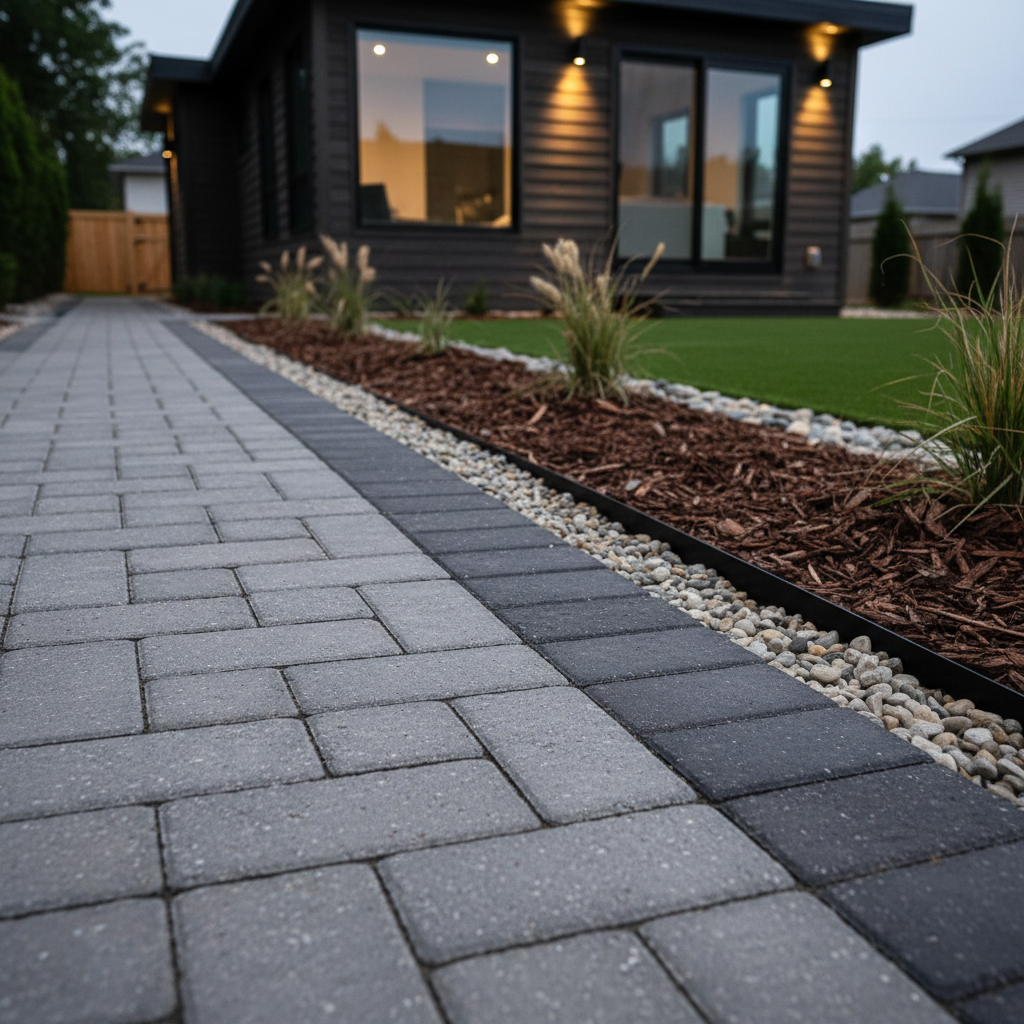
Interlocking and paver paths
- Compact a stable base and set edge restraints so joints stay tight through freeze-thaw.
- Choose paver textures for traction and visual warmth; consider soldier-course borders to guide foot traffic.
- Integrate drains or swales so heavy rains don’t pool near entries.
Grading and lawn restoration
- Restore lawn with premium sod on screened topsoil after construction traffic.
- Feather grades into patios and walks to eliminate ankle-twisting lips.
- Use geotextile and clear stone under hardscape to resist settlement over time.
Fencing and privacy
- Blend privacy requirements with neighborhood character using fence styles that fit.
- Add strategic evergreen screens near windows and around seating areas.
- Use gates with clear opening widths for moving bikes, bins, and strollers.
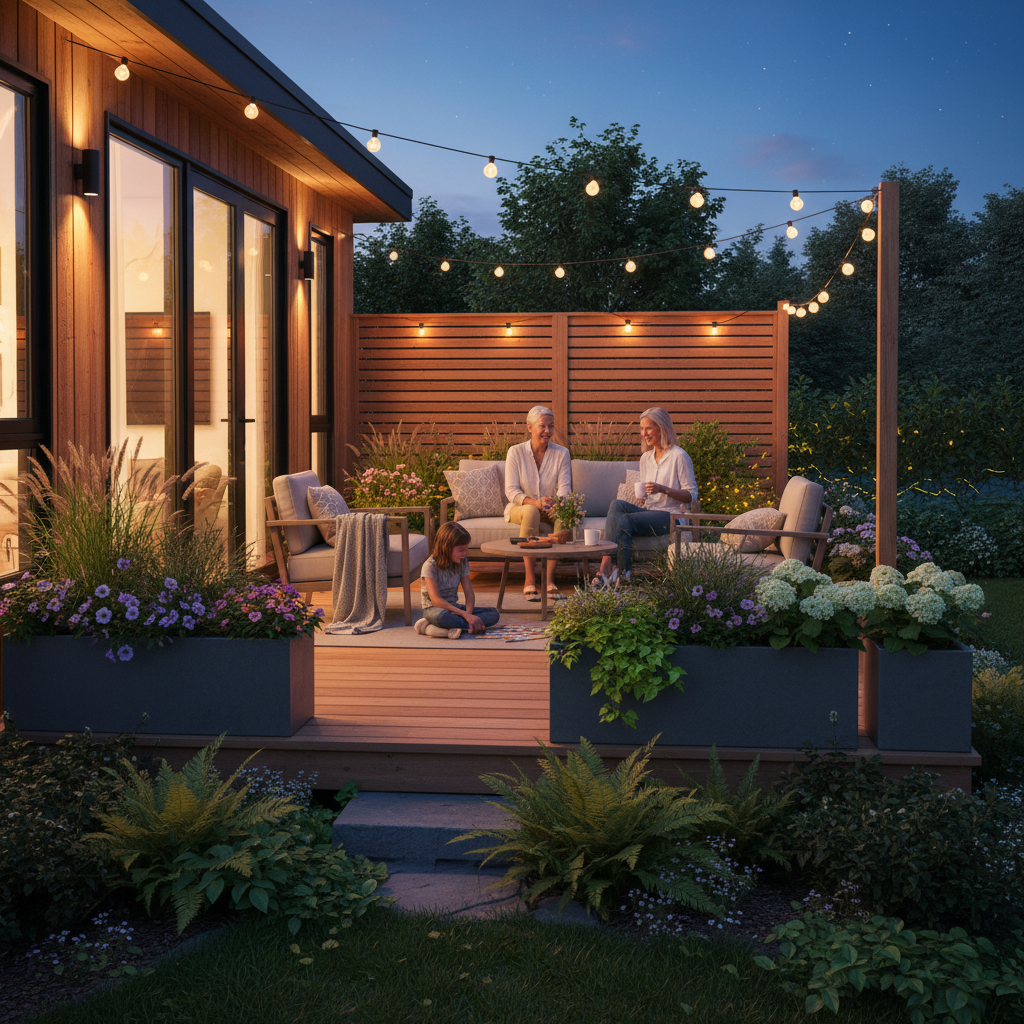
Decks and small outdoor rooms
- Scale decks to daily use, not just special occasions, so furniture fits without crowding.
- Orient seating for sun/shade balance and good indoor-outdoor flow.
- Detail stairs and handrails for comfort and all-season safety.
Approval Tips and Common Mistakes
Start with feasibility, document access widths, and protect trees and drainage from day one. Avoid designing the building in isolation—coordinate walkways, fencing, grading, and snow storage on the drawings so operations and maintenance stay simple after move-in.
- Tip: Measure your side-yard and gate openings early; tight access may affect construction method and interlocking pallet sizes.
- Tip: Map snow storage, bins, and bike routes on the plan—future you will thank you every winter.
- Mistake: Forgetting utility corridors and trenching new hardscape after the fact.
- Mistake: Undersizing paths; two-way movement avoids scuffs in lawn edges and beds.
- Mistake: Ignoring water flow; finished grades that don’t drain will shorten the life of both buildings.
Need a Feasibility Check and Concept Plan?
If you’re considering a garden suite in Mississauga, we can confirm feasibility, outline a right-sized concept, and map access, grading, and privacy. Our coordinated design-build keeps your whole property in view from the first sketch to final landscaping.
We serve homeowners and property managers across Mississauga and the GTA with integrated design-build services—interlocking and pavers, decks, fencing, retaining walls, stone work, sod installation, and planting. Explore our garden suites service and see how we align building and landscape into one plan.
How This Fits the Landscaping GTA Picture
Garden suites are part of a bigger landscaping GTA trend: turning every square foot into usable, low-maintenance space. Pair the building with interlocking, decks, fencing, and well-structured planting to get year-round function and curb appeal across the whole lot.
Across the GTA, we see similar patterns: homeowners want flexible space without sacrificing the yard. The best results come when the suite location, walkway layout, and privacy strategy serve the daily routine—garbage day, winter shoveling, summer hosting, and quiet evenings alike. That’s the design-build lens we bring to each Mississauga project.
For inspiration on yard planning and outdoor room thinking, some design idea overviews—though not Mississauga-specific—can help spark layouts and planting palettes you can adapt to local conditions. General idea roundups such as backyard design ideas that work, broader Ajax landscaping transformations, and a best practices review show common patterns like clear paths, layered planting, and cozy lighting that carry well into any GTA backyard plan.
FAQ: Garden Suites in Mississauga
These are the questions Mississauga homeowners ask most: definitions, timelines, approvals, and how landscaping integrates with a garden suite. Each answer is concise and practical so you can decide your next step with confidence.
What is a garden suite and how is it used?
A garden suite is a small, self-contained home in your backyard. It works for multigenerational living, guests, or a legal rental. The key is planning placement, access, drainage, and privacy so the building and landscape function together year-round.
Do I need to redesign my yard for a garden suite?
You should expect some coordinated updates. Most projects add an interlocking path for safe access, adjust grading for drainage, and refine privacy with fencing and planting. Planning these elements before construction prevents rework later.
How long does the process take?
Timelines vary with design complexity and approvals. A typical sequence includes feasibility, concept, drawings, approvals, site prep, construction, and landscaping. Coordinating the building with hardscapes and planting keeps the schedule efficient.
Can you integrate decks, fencing, and planting with the suite?
Yes. Our team designs and builds interlocking paths, decks, privacy fencing, sod, and planting alongside the garden suite. That way, access, privacy, and drainage are solved together and the yard looks finished on day one.
What should I do first if I’m interested?
Start with a feasibility check. Measure access widths, list your needs, and gather photos. We’ll review your lot, sketch a concept that includes paths and privacy, and outline next steps for drawings, approvals, and build sequencing.
Conclusion and Next Steps
A well-planned garden suite adds flexible living space and long-term value—especially when paths, grading, fencing, and planting are designed together. Begin with feasibility, align on a clear concept, and coordinate landscape integration so the entire property works in every season.
- Key takeaways:
- Plan the building and the yard together—people flow and water flow drive success.
- Use interlocking for safe access, grading for drainage, and layered privacy for comfort.
- Document snow storage, bins, lighting, and utilities before you break ground.
- Restore lawn and beds thoughtfully so the space looks finished on day one.
Ready to explore a garden suite? We help homeowners in Mississauga and across the GTA with feasibility checks, concepts, approvals support, and coordinated builds. Visit our garden suites service page to start a site assessment and concept plan discussion.


