
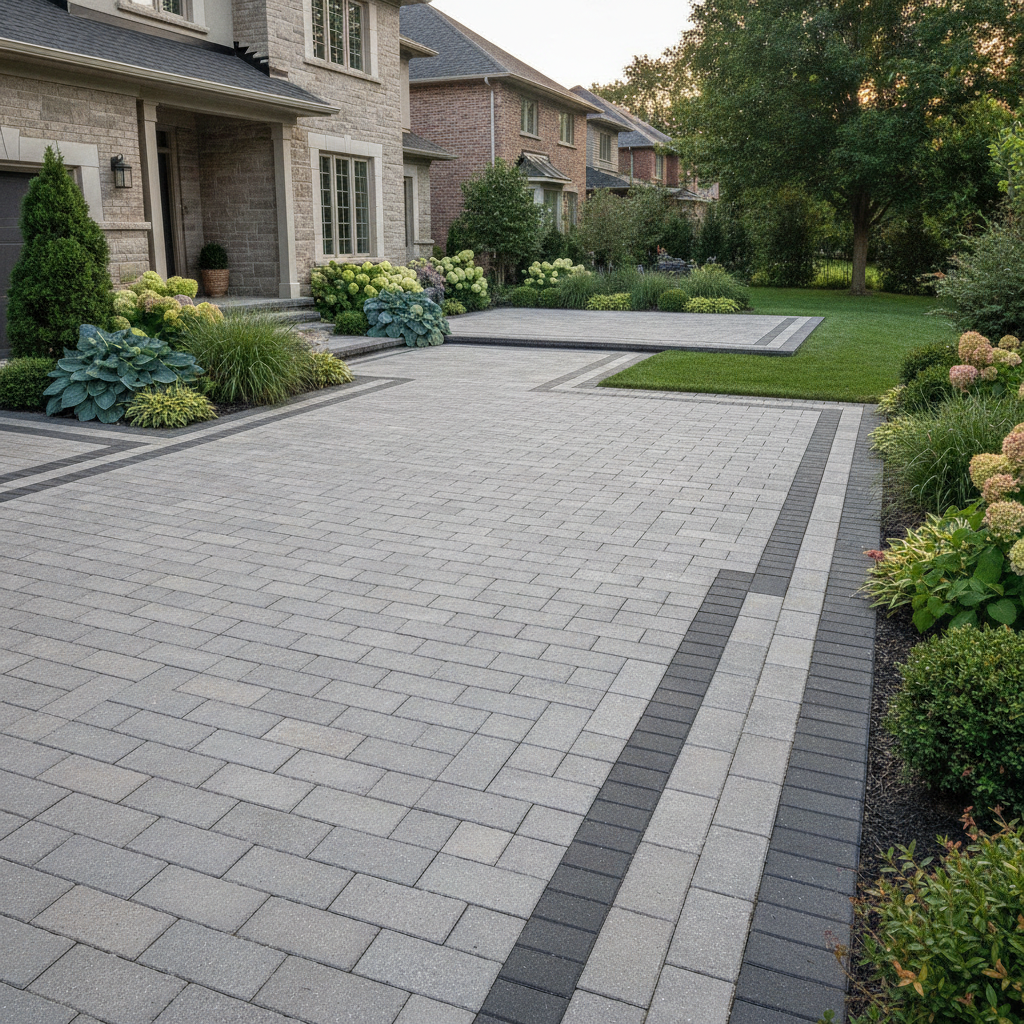
Pavers for driveway or patio are interlocking units set over a compacted base to build durable, repairable hardscapes. In Mississauga, driveways need thicker pavers and deeper bases than patios to carry vehicle loads and survive freeze–thaw cycles. Getting base prep and edge control right prevents rutting, heave, and those uneven joints that catch your shovel every winter.
Quick answer: For driveways, use 80 mm interlocking concrete pavers over a deeper, well‑compacted base with geotextile, continuous edge restraint, and polymeric sand. For patios, standard‑thickness pavers on a shallower base work. In Mississauga’s freeze–thaw, compaction, drainage slope, and tight edges are what stop shifting and future repairs.By HR Greenroots Landscaping • Last updated: 2026-07-13
Service area Mississauga and the Greater Toronto Area (GTA) Hours Open 24 hours, 7 days a week Average rating 4.9 average from verified client reviews Core services Interlocking & Pavers, Driveway Extensions, Landscape Design, Retaining Walls On‑site consultations Yes — coordinated design‑build with maintenance planning- Overview: your paver plan
- Driveway vs patio specs
- Materials that survive GTA winters
- Base prep that actually lasts
- Combine driveway extension + patio
- What pro installs include
- Real results in the GTA
- FAQs
- Key takeaways
Mississauga installer tip
Along Matheson‑area lots we often hit clay pockets that “pump” during spring thaws. We lay geotextile and stage compaction in thinner lifts to lock the base, and we schedule deliveries to avoid congestion near EPIC College of Technology and Saigon Park so your driveway isn’t blocked when you need it most.
Overview: your paver plan
Long‑lasting pavers start with the right spec for the load, then careful base building, drainage slope, and continuous edge restraint. In Mississauga, that combination keeps joints tight and surfaces level through freeze–thaw and snowplow passes, whether you’re parking a minivan or furnishing a backyard patio.
In our experience across Mississauga subdivisions and older neighborhoods, design decisions you make now either prevent or guarantee callbacks. A driveway built with 60 mm units will look fine on day one, but turning tires will rut the paths by winter two. That’s why we size thickness and base to the job, not the catalog photo.
- Load drives the spec: Vehicles demand thicker units and deeper base than foot traffic.
- Water goes somewhere: We set 1.5–2% fall away from foundations toward drains or planting.
- Edges keep order: Continuous restraints stop pavers from creeping into lawn or beds.
- Plan the whole front: Tie walkway, steps, and beds into the driveway for clean flow.
Driveway vs Patio Pavers: Why the Use Case Changes Everything
Driveways carry concentrated wheel loads and torque, so we use 80 mm interlocking concrete pavers over a deeper base. Patios and walkways can use standard‑thickness units on a lighter base. Pattern choice matters too: herringbone for driveways; larger slabs belong on patios, not under vehicles.
We take a clear stance: we won’t install 60–70 mm patio slabs on a driveway. We’ve lifted Mississauga aprons where thin pavers under a minivan sank along the tire paths, the soldier course tipped, and snow shovels kept catching edges. Rebuilding meant tearing out the first install. Avoidable—and expensive.
SpecDrivewayPatio/Walkway Paver thickness80 mm interlocking concrete (our standard)60–70 mm PatternHerringbone or small‑unit running bondRunning bond, modular, or large slabs Base depthDeeper, compacted in thin liftsShallower, compacted in thin lifts Edge restraintContinuous, spiked into baseContinuous, spiked into basePatterns that resist ruts
- Herringbone: Interlocks in both directions; our go‑to under turning loads.
- Running bond with small units: Works if base is excellent; avoid long seams at wheel paths.
- Large‑format slabs: Reserve for patios; on driveways they crack, tip, or rock.
For a homeowner‑level overview of Ontario interlock trade‑offs, see this Ontario pros and cons piece. We align our specs with these load realities every day.
Paver Materials That Actually Hold Up in GTA Winters
Choose dense, rated materials and the right surface texture. We recommend 80 mm interlocking concrete pavers for driveways. Porcelain stays off driveways—full stop. For patios, concrete pavers, select granites, or porcelain (on the right system) work well if slip resistance and drainage are addressed.
- Interlocking concrete pavers: Best all‑rounder for driveways; easy to repair a single unit after utility work.
- Natural stone (e.g., granite): Durable and classic; pick frost‑resistant stock and a grippy finish.
- Porcelain pavers: Low absorption helps on patios, but not under cars. We don’t place porcelain on driveways.
- Permeable variants: Useful near downspouts or long runs that ice up—when the base is designed for infiltration.
Manufacturers like Techo‑Bloc and Belgard publish freeze–thaw and slip‑resistance details. For a plain‑English walk‑through of outdoor zone choices, this best‑by‑zone overview is a helpful primer.
The Base Prep Step Most Homeowners Don’t Know to Ask About
The difference between a driveway that lasts and one that sinks is below the surface: clean excavation, geotextile over subgrade, granular base compacted in thin lifts to final slope, bedding layer, tight cuts, continuous edges, and polymeric sand vibrated into joints. Skip any step and the freeze–thaw finds it.
Mississauga has variable subsoils. We’ve opened driveways where a clay seam under one wheel path “pumped” water, softened the base, and the apron dropped. Our fix: dig out to firm native, set geotextile, rebuild in thin lifts, then reset pavers and re‑activate joint sand. It stays put after that.
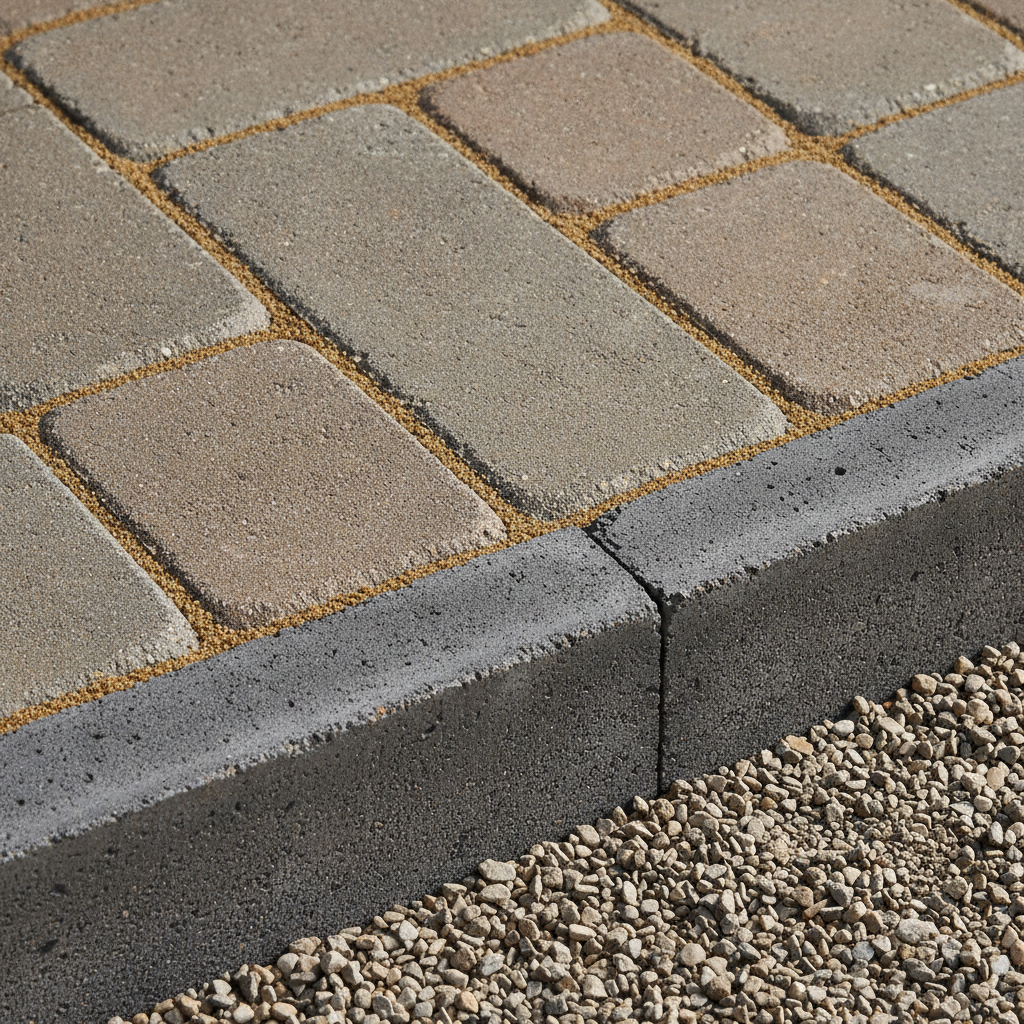
- Don’t spike edges into frost: Edges set in frozen ground will lift and open joints by spring.
- Mind polymeric sand cure: Early pressure‑washing or a heavy storm can wash it out; we protect the surface until it locks.
- Drainage first: We set 1.5–2% fall so meltwater leaves the surface instead of soaking joints.
Local considerations for Mississauga
- Clay pockets near industrial fill need geotextile; we’ve seen bases settle where fabric was skipped.
- Spring thaws swell soils; we schedule compaction when the subgrade is firm, not saturated.
- Permit timing affects excavation windows for widenings—line it up before we mobilize.
For sequencing visuals, this approachable step‑by‑step paver guide mirrors many of the steps our crews follow in the field.
Considering a widening? Review local rules in our Mississauga driveway widening planning guide and our quick note on interlocking permits.
Driveway Extensions and Patio Add‑Ons: When to Combine Projects
Combine a driveway extension with walkways or a front‑patio build so we excavate once, build one continuous base, match grades, and carry the same paver family through. You’ll get crisper edges, fewer seams, and less disruption than splitting the work across seasons.
On narrow Mississauga lots off Hurontario, we often solve two problems at once—parking and drainage. A driveway extension paired with a low retaining wall along the property line creates space and sets a reliable grade so meltwater stops running toward the neighbor’s side yard.
- Match materials: We carry the same field unit and soldier course through extensions so it reads as one build.
- Plan crossings: We sleeve for lighting and gates before base compaction so you’re ready later.
- Finish the frontage: Re‑edge beds, refresh mulch, and patch sod in the same visit for a finished look.
See layout options in our driveway extensions service and this Mississauga extension example. If you’re in Toronto proper, here’s our interlocking pavers in Toronto overview.
What a Professional Paver Installation Includes (and What to Watch For)
Expect layout and grade verification, excavation to firm subgrade, geotextile, compacted base in thin lifts, bedding layer, laying and cuts, continuous edge restraint, vibratory compaction, and polymeric joint sand activation. Red flags: thin base, skipped fabric, edges set in frost, and no clear drainage plan.
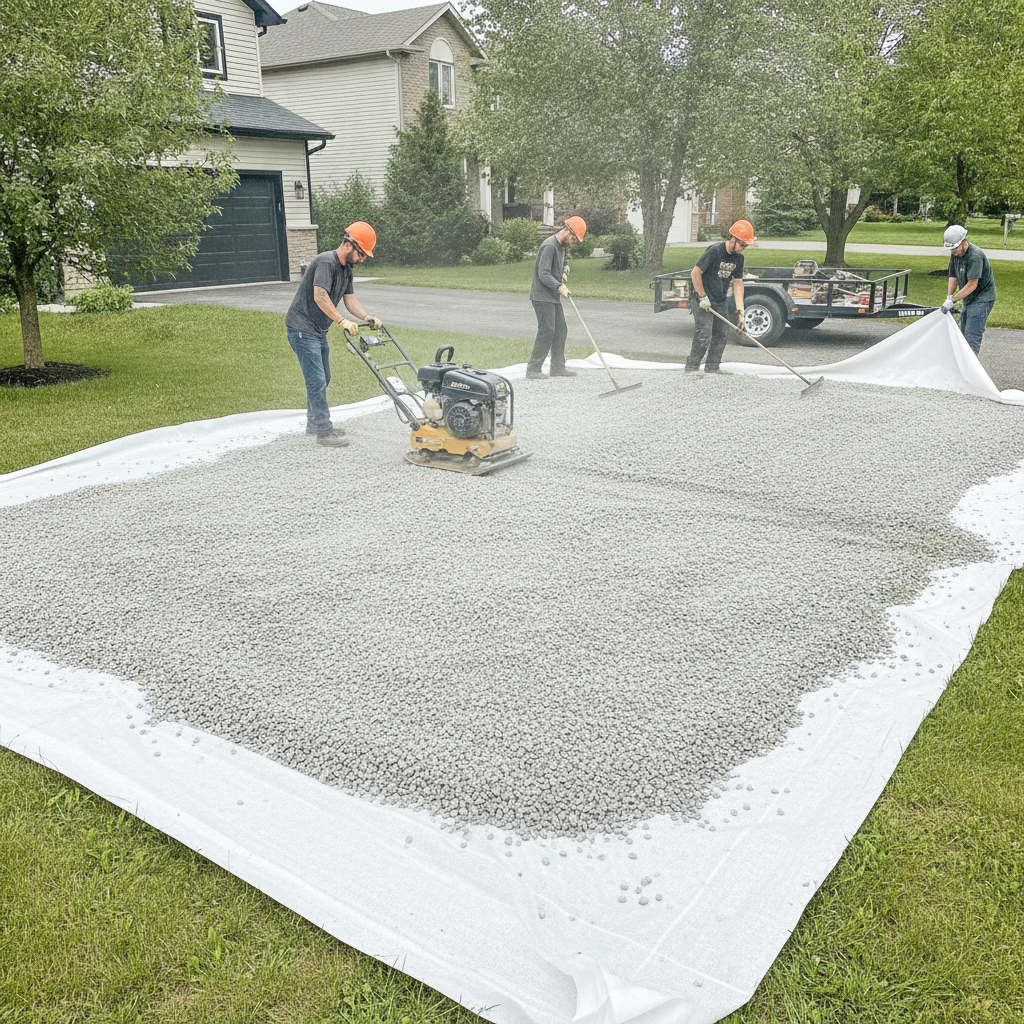
- We verify slopes: Before laying a single unit, we check falls away from the house and to a drain or lawn basin.
- We cut clean: Tight, square cuts at steps, shed pads, and utility boxes reduce rocking and chipped corners.
- We document: Before/after photos and a maintenance brief so you know how to protect the joints.
On‑site red flags
- Base dumped in one thick layer and compacted once—expect settling.
- No geotextile over suspect soils—watch for pumping and dips.
- Edge restraint nailed into topsoil—not the base—edges will wander.
Ready to plan? Book a fast on‑site assessment. We’ll right‑size the base, match materials, and map drainage so your surface stays level. Start here: Interlocking & Pavers — Mississauga.
Real Results: HR Greenroots Paver Projects in the GTA
We build for what GTA properties face: tight lots, clay seams, and real winter. Driveway widenings with herringbone fields, patio refreshes with rebuilt bases, and side‑yard walkways with proper fall—each solved drainage and durability problems while improving curb appeal.
- Lakeview driveway + entry: 80 mm herringbone field, soldier‑course curb, revised slope to a channel drain; refreshed front bed edges and mulch.
- Backyard patio reset: We opened a sunken zone, rebuilt base with fabric, relaid pattern, and re‑activated polymeric sand; no ponding since.
- Side‑yard walkway: Narrow run rebuilt with a steady 2% fall; adjacent sod replacement stopped spring mud tracking.
Need more space in front? Our retaining wall planning checklist shows how walls and interlock work together on sloped frontages.
What clients say
“I had an incredible experience working with HR landscaping and their team - they were so responsive and fit my project in right away despite it being their busiest season... They were efficient yet thorough with their work and left the site looking incredibly clean. Overall, super happy - will be using again and would recommend to anyone.” — Madi (5★)
“Great experience. Worked hard on fixing our broke fence and did a great job.” — Sreyo (5★)
FAQs About Pavers for Driveways and Patios
Use 80 mm interlocking concrete pavers and deeper bases on driveways; standard thickness is fine for patios. Herringbone patterns resist turning loads. Build the base in thin lifts with fabric, set continuous edges, and maintain joints yearly to handle GTA winters.
Do driveway pavers need to be thicker than patio pavers?
Yes. Vehicle weight and turning concentrate loads at the wheel paths, so we use 80 mm interlocking concrete pavers and a deeper, well‑compacted base. Patios and walkways carry foot traffic, so standard‑thickness units work if the base, edges, and joints are built correctly.
Is porcelain suitable for a driveway?
No. We don’t place porcelain under vehicles. While its low absorption helps on patios, porcelain panels aren’t designed for concentrated wheel loads or winter torque. Use 80 mm interlocking concrete pavers for driveways and keep porcelain for patios with the right setting system.
What causes paver joints to fail after installation?
Two common culprits: polymeric sand disturbed before curing (heavy rain or early pressure‑washing) and water that lingers on the surface. We protect fresh joints, then recommend spring top‑ups as needed and confirm your grading moves meltwater off the surface.
Can I extend a driveway and add a walkway in one project?
Yes—and it’s efficient. We excavate once, build a continuous base, match grades, and carry the same paver family through. The result is fewer seams, tighter edges, and less disruption. Review local guidelines first, then schedule both scopes together.
Key takeaways
Build for load, water, and winter. Use 80 mm interlocking concrete pavers for driveways, standard units for patios, compact bases in thin lifts with fabric, and lock edges and joints. Combine scopes when practical and service joints yearly to keep surfaces tight and tidy.
- Driveways: 80 mm concrete pavers, deeper base, herringbone pattern.
- Patios: standard thickness; prioritize slip‑resistant textures and drainage.
- Base and edges decide lifespan; shortcuts show by the second winter.
- Combine driveway extensions, walks, and bed refreshes for one clean mobilization.
Planning in Mississauga? Start with our Interlocking & Pavers team. We scope, permit‑plan, and build durable hardscapes across the GTA.


