Privacy fence materials comparison for Mississauga homeowners
If you are choosing a privacy fence in Mississauga or elsewhere in the GTA, the right material depends on what you value most: lowest upkeep, maximum sightline blocking, winter durability, curb appeal, or budget value over time. This comparison lays out consistent buyer criteria and compares wood, vinyl, composite, metal, chain link with privacy slats, and living screens so you can match a material to your priorities.
Quick recommendations at a glance
- Lowest maintenance: vinyl or composite, wash and occasional fastener checks.
- Best visual privacy: solid wood board-on-board or composite solid-panel fencing; a 6-foot solid panel is a common privacy benchmark (privacy fence guide).
- Best value over time: pressure-treated wood when maintained, or composite where upfront cost is acceptable.
- Best for Ontario winters: metal posts with properly set footings combined with rot-resistant or frost-tolerant panels; see material-specific winter notes below (Ontario fence guide).
- Best for pets and kids: solid-panel wood or composite for containment and minimal gaps.
- Most natural look: living screens paired with a structural fence for immediate privacy and a long-term green buffer (style and function).
How to compare privacy fence materials: the buyer's criteria
Use the same criteria to compare options so your decision aligns with real priorities. The core criteria are:
- Durability and failure modes: rot, UV degradation, corrosion or brittle cracking.
- Maintenance expectations: staining, painting, or simple washing and fastener checks.
- Privacy effectiveness: whether a material supports solid panels or requires slats or plantings to close sightlines.
- Aesthetics and curb appeal: natural wood grain or engineered finishes and how they age.
- Climate suitability: how a material responds to Ontario winters, freeze-thaw cycles, and road salt exposure.
- Installation complexity and site prep: post depth, drainage, and edge control where the fence meets sod, interlocking or retaining walls.
- Cost-to-own: initial purchase and installation plus routine upkeep over the fence lifespan.
- Pet, child and security needs: whether pickets, gaps, or panel joins meet containment and safety expectations.
These factors are commonly used by reputable fence guides to match material choice to real site conditions and budgets (material comparison) and to explain why material choice changes cost and upkeep (cost and upkeep).
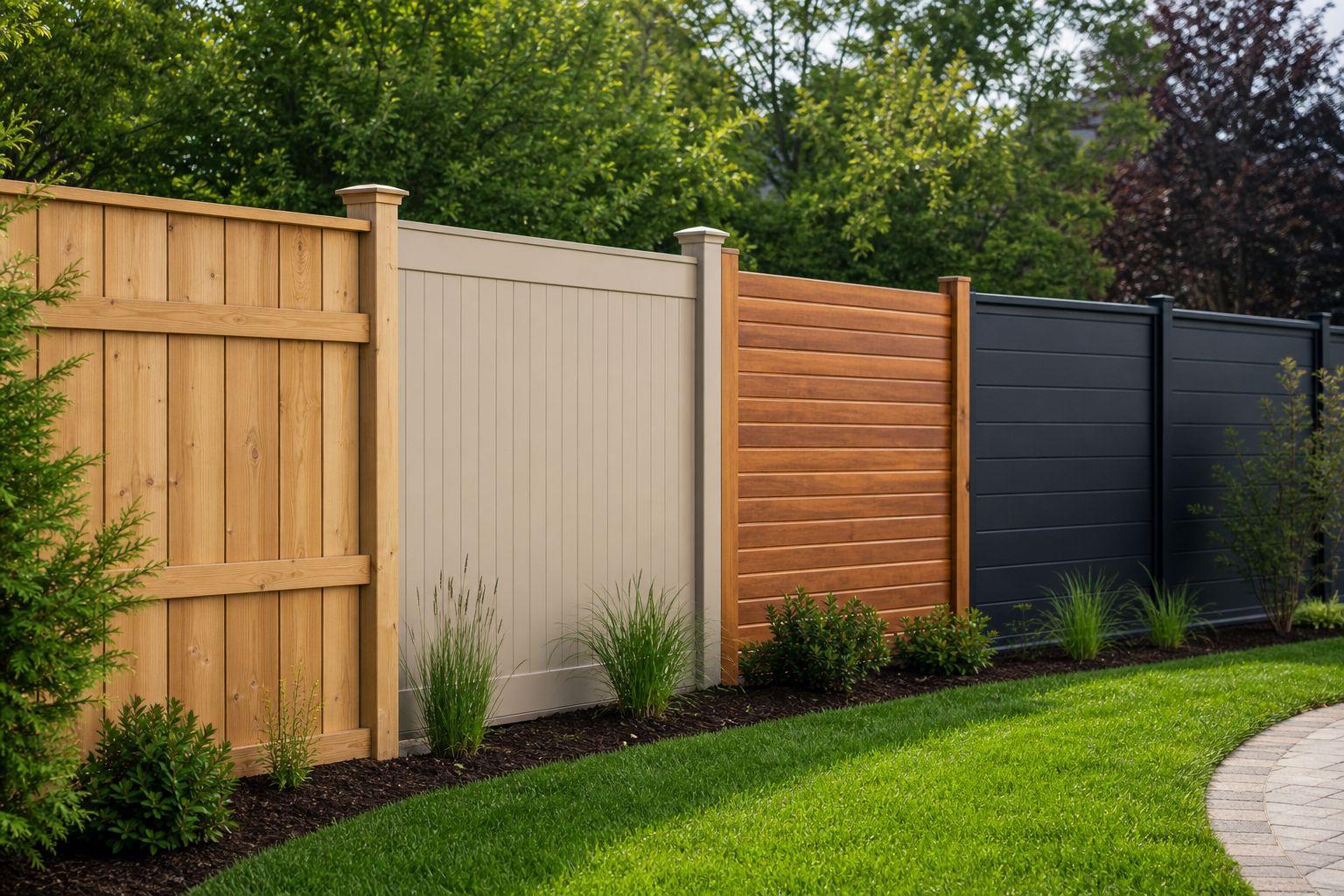
Material comparisons: wood, vinyl, composite, metal, chain link with slats, and living screens
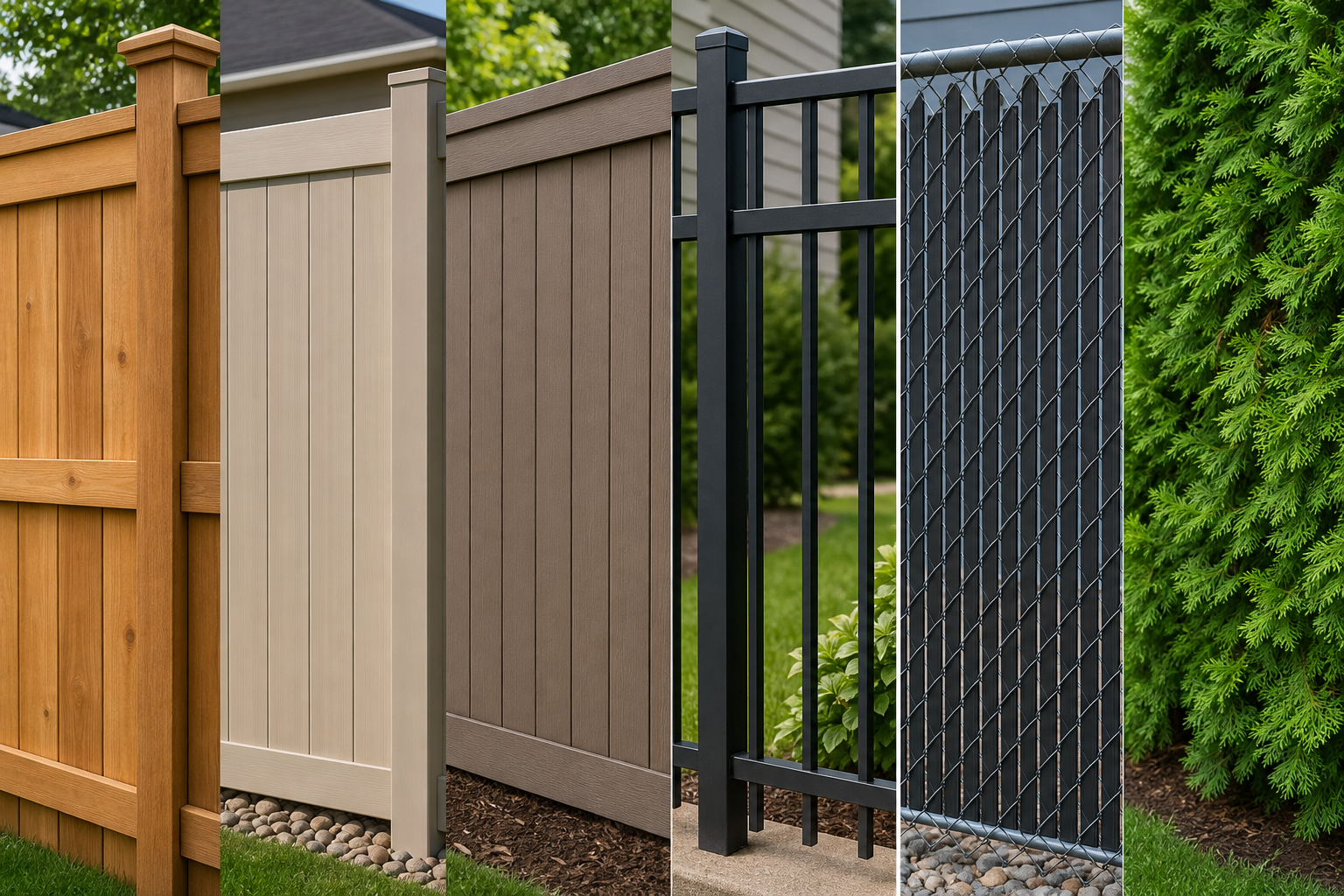
Wood
One-sentence summary: natural appearance and customisable styles make wood the traditional privacy choice, but it requires active maintenance to perform well.
- Pros: Warm, natural look, easy to customise height and profile, repairable one board at a time.
- Cons: Regular staining or sealing recommended, vulnerable to rot and warping if moisture control is poor.
- Maintenance: Clean and stain or seal every few years depending on finish and exposure; check fasteners and replace boards when they split.
- Typical failure modes in Ontario: rot at ground contact, freeze-thaw movement causing loosened posts, and fastener corrosion where dissimilar metals contact treated lumber.
- Privacy effectiveness: Solid board, board-on-board, and shadowbox styles can give full visual screening when installed with limited gaps.
- Installation notes: Proper post depth and gravel footing, good drainage at post holes, and clean edge control at the lawn line reduce rot and heave. Request documented base prep in your quote; HR Greenroots emphasises this on hardscape and fencing work (HR Greenroots).
- Best for: Homeowners who prioritise a natural look and are willing to commit to scheduled maintenance.
Vinyl
One-sentence summary: low-maintenance, consistent finishes and solid-panel options make vinyl attractive, but it has thermal and attachment limitations in cold climates.
- Pros: Wash-only upkeep for most stains, consistent factory colour, and quick visual privacy with solid panels.
- Cons: Limited ability to refinish, panels can become brittle in extreme cold, and inadequate bracing can lead to wind uplift damage.
- Maintenance: Periodic washing and inspection of posts, occasional tightening or replacement of rails and fasteners.
- Typical failure modes in Ontario: brittle cracking in very cold temperatures, warping from improper allowance for thermal expansion, and movement at undersized posts during freeze-thaw cycles (Ontario material note).
- Privacy effectiveness: Solid vinyl panels provide complete sightline closure when panels are correctly installed and braced.
- Installation notes: Use proper post setting methods, account for thermal expansion in panel runs, and select reinforced rails where wind exposure is high.
- Best for: Busy homeowners who want low visible maintenance and consistent appearance without painting.
Composite
One-sentence summary: composite boards mimic wood appearance while reducing routine upkeep, with tradeoffs in thermal movement and higher upfront cost.
- Pros: Wood-like aesthetics without as much rot risk, factory finishes that reduce re-coating, and strong privacy performance with solid-panel assemblies.
- Cons: Higher initial cost than pressure-treated wood, requires allowance for thermal expansion, and can fade over time under UV exposure.
- Maintenance: Washing and occasional fastener checks, minimal staining or sealing required.
- Typical failure modes: Thermal expansion creating visible gaps if not installed with correct clip systems, surface fading over long term.
- Installation notes: Use manufacturer-specified clips and spacers, and ensure sturdy posts and base prep to control movement.
- Best for: Homeowners who want wood appearance with lower routine maintenance and are willing to invest more upfront.
Aluminum and steel (ornamental and privacy metal options)
One-sentence summary: metal provides strength and low rot risk; ornamental styles are not inherently private, but slat systems or solid metal panels can deliver privacy plus security.
- Pros: Corrosion-resistant options, narrow profiles for modern looks, and strong security when steel is used with close post spacing.
- Cons: Ornamental iron and aluminum do not block sightlines without slats or screens, and painted metal requires touch-up to prevent corrosion.
- Maintenance: Periodic inspection for finish wear and touch-up painting for bare spots; galvanized or powder-coated finishes reduce upkeep.
- Typical failure modes in Ontario: Corrosion where coatings fail, and movement at inadequately protected footings during freeze-thaw events (Ontario guide).
- Privacy effectiveness: Best achieved with metal privacy panels or integrated slat systems over an ornamental frame.
- Installation notes: Metal posts set in concrete offer long-term stability, and corrosion protection is a material selection priority.
- Best for: Owners seeking a modern, secure look that resists moisture and avoids rot.
Chain link with privacy slats
One-sentence summary: a cost-conscious privacy retrofit that gives visual screening but delivers an industrial aesthetic and limited curb appeal.
- Pros: Lower initial cost, good airflow, quick installation, and slats that can be replaced individually.
- Cons: Industrial feel, slats can fade or break, and wind can accelerate slat wear or dislodge clips.
- Maintenance: Replace damaged slats, inspect ties and slat clips, and maintain tension on the chain-link fabric.
- Typical failure modes: Slat cracking from UV and cold, and sagging where tension anchors are inadequate.
- Privacy effectiveness: High when slats are fully inserted, but aesthetics and acoustic dampening are limited compared to solid-panel fences.
- Best for: Service yards, rear-property boundaries, or homeowners on tighter budgets who prioritise function over finish.
Living screens and green fences
One-sentence summary: hedges and planted screens provide natural privacy and sound buffering, but they take time to establish and depend on species selection and maintenance.
- Pros: Natural look, ecological benefits, and seasonal texture and sound buffering.
- Cons: Slow to reach full height, seasonal thinning in winter months for deciduous choices, and root and site requirements that can conflict with nearby structures.
- Maintenance: Pruning, irrigation during establishment, and periodic shaping to maintain density.
- Typical failure modes: Poor establishment from inadequate watering, root competition, or planting species unsuited to local microclimates.
- Privacy effectiveness: Moderate to high when mature, often best combined with a structural fence for immediate privacy.
- Best for: Homeowners who want a living aesthetic and can plan for an establishment period and ongoing horticultural care.
Installation and site-prep: frost, drainage and long-term edge control in Mississauga
Most fence failures come from poor site preparation rather than material choice. Insist on professional post-setting that addresses frost heave, clear drainage paths, and clean edge control where the fence meets sod, interlocking or retaining walls. HR Greenroots emphasises strong base preparation and grading on hardscapes and related installations, and you should request the same level of documented prep for fencing work (company emphasis). For detailed technical checks, consult HR Greenroots’ fence installation materials guide before your estimate (fence installation materials guide).
Permits, property line and neighbour considerations
Regulations vary across municipalities and HOAs. Confirm property lines with a surveyor or municipal parcel map, and check local bylaws or HOA rules for maximum heights and setback requirements before you order materials. If in doubt, request the installer include a site survey and permit handling in the quote.
Which material fits which priority
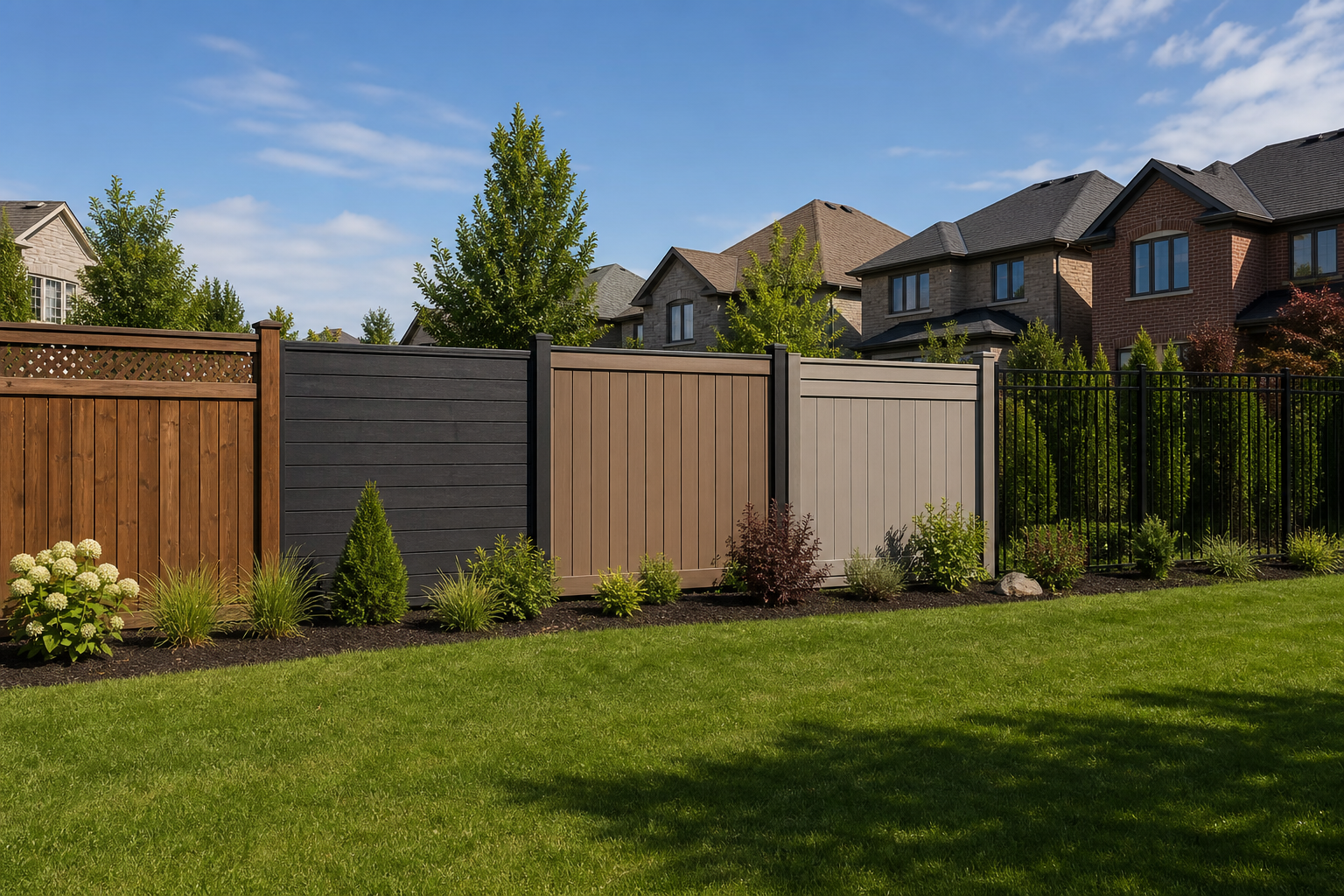
- Lowest maintenance: vinyl or composite for wash-only upkeep and minimal repeated coatings.
- Best visual privacy today: solid wood board-on-board or composite solid-panel installations for full sightline closure (privacy guide).
- Best long-term value with maintenance: pressure-treated wood is lower cost up front but needs scheduled upkeep to age well.
- Best for security and modern curb appeal: metal privacy panels or aluminium with slat attachments.
- Best eco or natural aesthetic: living screens combined with a low structural fence to provide privacy during establishment.
Questions to ask your installer and a contractor quote checklist
Use this checklist to compare bids and reduce risk:
- What material brand and grade will you use, and can I see manufacturer spec sheets?
- How deep will posts be set, what mix will you use for concrete, or will you use gravel-set footings for drainage?
- How will you mitigate frost heave and allow for thermal expansion where applicable?
- Will you remove and dispose of the old fence, and include site clean-up in the price?
- What warranty covers materials and labour, and how are follow-up repairs handled post-completion?
- Can you provide local references or photos of similar installations?
- Request a written scope that includes grading, edge control at the lawn or interlock, and post spacing.
For more technical installation guidance, review HR Greenroots’ fence installation materials guide before your on-site assessment (fence installation materials guide).
Common objections and realistic tradeoffs
Popular claims such as "vinyl is maintenance-free" or "wood is always cheaper long-term" oversimplify tradeoffs. Vinyl reduces routine painting but may need panel replacement if cracked. Wood is cheaper up front but requires ongoing sealing and board replacement. Living fences look great but need time to establish. The right choice depends on realistic expectations about upkeep, aesthetic priorities, and site conditions (material cost and upkeep).
FAQ
Which privacy fence material holds up best in Mississauga winters?
Materials that combine corrosion-resistant metal posts with rot-resistant boards or composite panels tend to tolerate freeze-thaw cycles better. Proper post depth, drainage and concrete footings are as important as material choice. For Ontario-specific material notes, see the component comparison that covers iron, aluminum and vinyl performance (Ontario fence guide).
What is the lowest-maintenance privacy fence option for a busy homeowner?
Vinyl or composite solid panels typically require the least regular upkeep, limited to washing and fastener checks. Composite provides a wood-like look with fewer coatings, while vinyl offers consistent colour but limited refinishing options (material comparison).
Do I need a permit in Mississauga to build a 6-foot privacy fence?
Fence permit rules vary by municipality and sometimes by lot or HOA. Do not assume a permit is not needed. Confirm with the City of Mississauga or your local authority and request that your installer include permit handling in the quote if needed. HR Greenroots can advise on site checks during an on-site assessment (HR Greenroots).
How do living fences compare to wood or vinyl for privacy and maintenance?
Living fences provide natural screening and ecological benefits, but they take seasons to establish and need pruning and irrigation. For immediate privacy, pair a living screen with a structural fence or plan for staged planting and maintenance.
What should I insist on in a contractor quote to reduce frost-heave and drainage problems?
Insist on specified post depth, concrete or engineered gravel footings, drainage provisions behind the fence line, and documented grading work. Ask for a written post-setting detail and a photo record of post installation so you have proof of proper base preparation.
If you want an on-site assessment and a written quote that includes base prep, grading and a documented installation plan, HR Greenroots Landscaping offers consultation and installation services across Mississauga and the GTA. Review the fence installation materials guide before booking to prepare questions and compare technical details (fence installation materials guide). Visit HR Greenroots Landscaping to request an estimate.