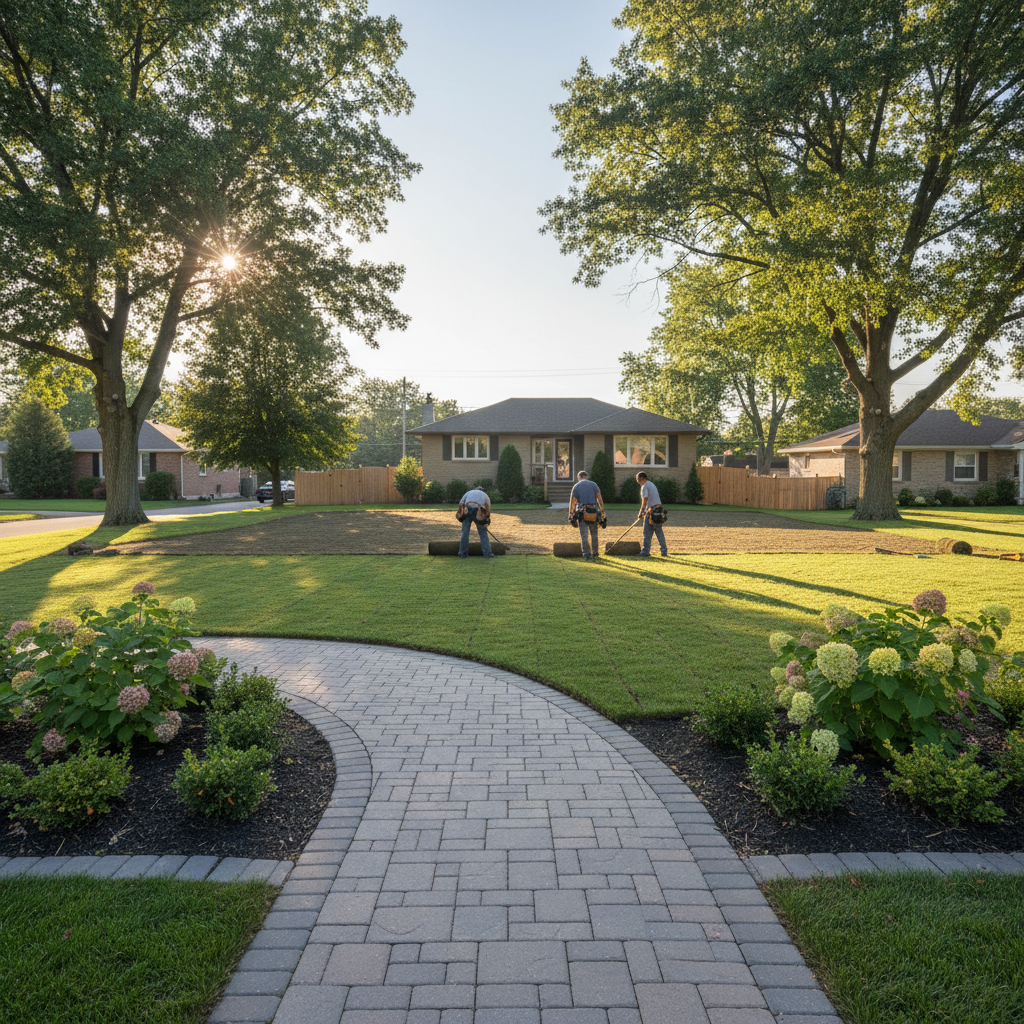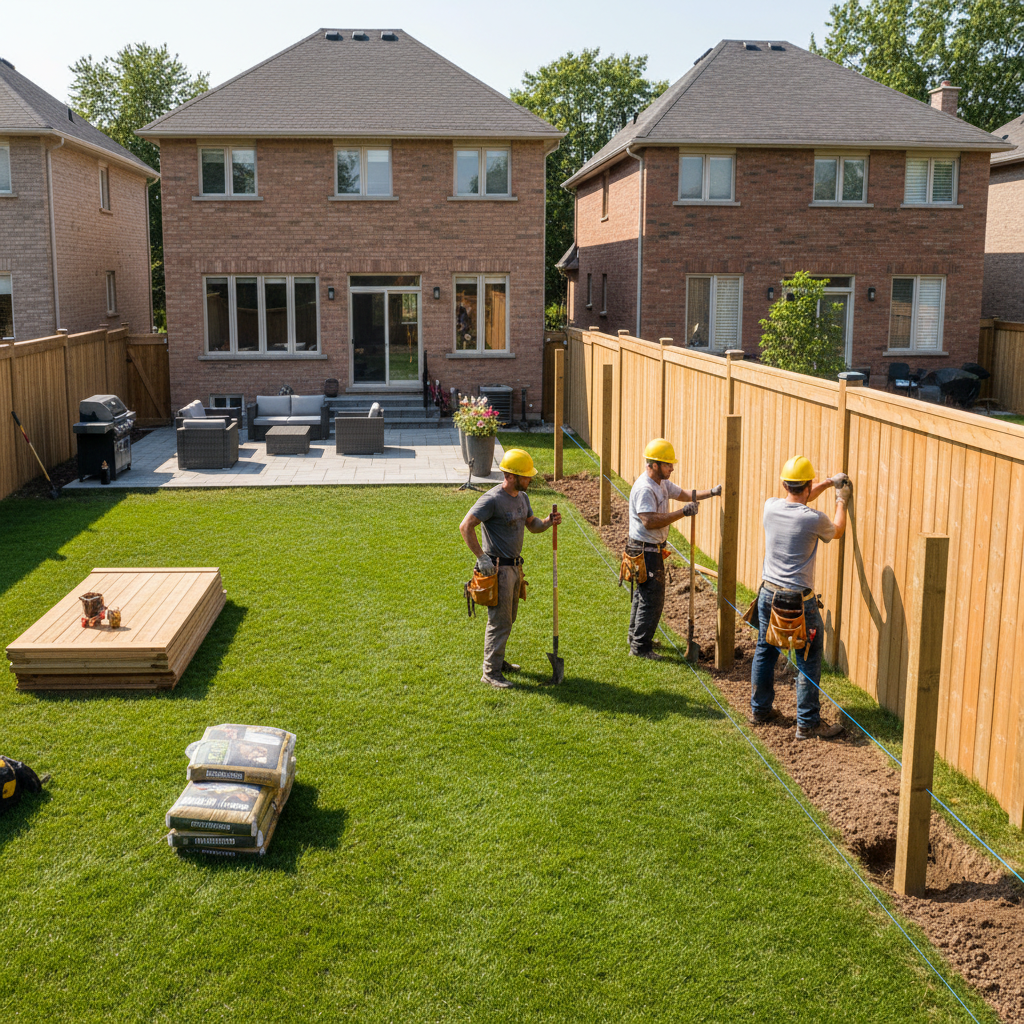
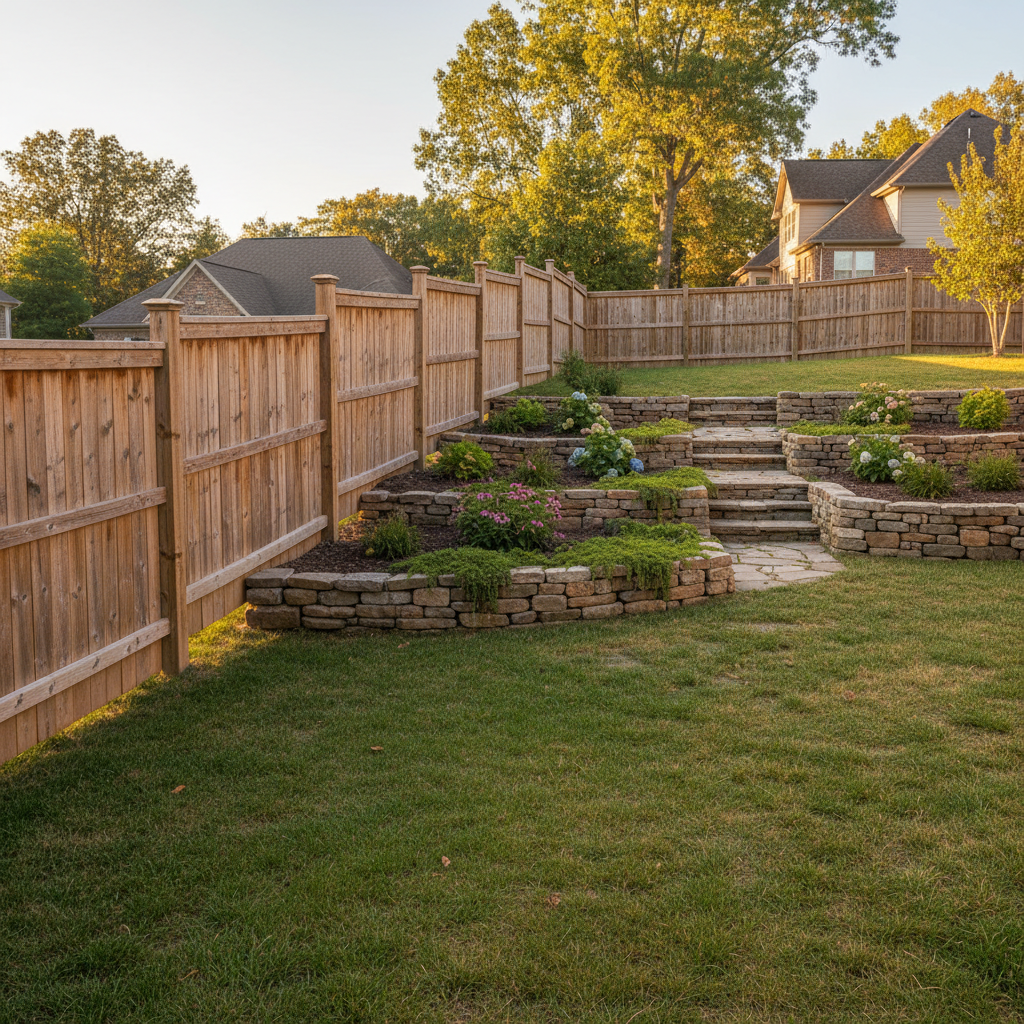
For sloped yards in Mississauga, the right solution blends screening with soil control. A privacy fence handles views and wind; a retaining wall holds grade and manages drainage. At 100 Matheson Blvd E unit 202, HR Greenroots Landscaping evaluates slope, soil, and privacy lines to recommend a privacy fence or retaining wall for sloped yards—or a coordinated combination.
By HR Greenroots Landscaping | Last updated: 2026-05-16
Overview and Table of Contents
Choosing between a privacy fence and a retaining wall on a slope starts with function: fences screen sightlines; walls stabilize soil and shape flat spaces. On many Mississauga lots, the best plan is a hybrid—tiered retaining and a stepped or racked fence—so you gain privacy, safety, and easier maintenance in one coordinated build.
Here’s how this complete guide helps you decide, plan, and execute with confidence.
- Understand what each system does and when to combine them
- See how racked vs. stepped fences work on grades
- Compare wall types for Ontario soils and freeze–thaw
- Follow a clear, 9-step planning and assessment workflow
- Apply best practices for drainage, posts, and edge control
- Use checklists, tables, and local tips for Mississauga sites
- Review real-world examples from HR Greenroots Landscaping projects
What is the right solution for a sloped yard?
In a sloped yard, a privacy fence provides screening and security, while a retaining wall resists soil pressure and creates level terraces. If you need both privacy and grade control, the right solution is a coordinated design where the wall sets structure and the fence completes the sightline.
Think of the slope as two problems to solve: views and gravity. We design for both. A fence addresses neighbors’ sightlines and wind buffering. A wall counters lateral soil pressure, prevents erosion, and makes flat, usable spaces for patios, decks, and lawn. When planned together, they age better and require less upkeep.
- Privacy priority: Favor a fence (6–8 ft where legally permitted) with strategic planting.
- Stability priority: Favor a retaining wall and grading to set safe, level pads.
- Hybrid need: Build terraces; place a stepped or racked fence at or behind the top of wall.
Our team integrates fences, walls, and planting layers so the yard looks intentional on day one and stays practical over seasons.
Why this decision matters in Mississauga
Mississauga’s neighborhoods and the broader Regional Municipality of Peel see freeze–thaw cycles, clay-rich soils, and heavy summer rain. Picking the right fence–wall mix reduces erosion, protects foundations, and cuts yard work. Done well, you’ll gain privacy, safer levels for living spaces, and cleaner edges that stay tidy.
Local conditions drive smart choices. Clay soils hold water; winter frost lifts weak footings; and summer downpours test drainage. A fence alone won’t stabilize a slope. A wall without privacy screening won’t solve sightlines. Our designs balance structure, planting depth, and durable materials so the result survives the seasons and still looks sharp.
- Drainage first: Every sloped solution needs a path for water away from structures.
- Frost-aware construction: Posts and wall bases must be set to frost‑resistant depths.
- Maintenance planning: Edge control and mulch reduce washouts and weekly chores.
How fences on slopes and retaining walls actually work
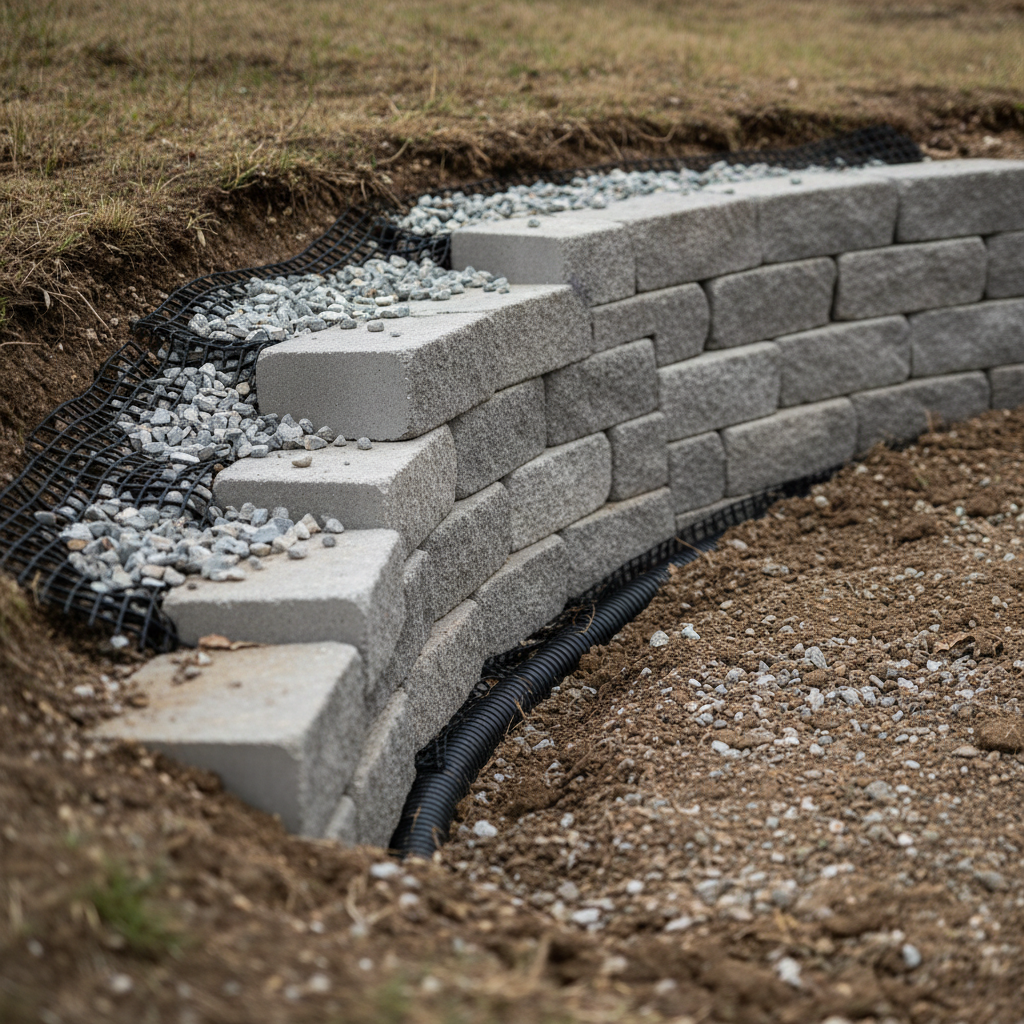
A racked fence follows the slope with angled rails; a stepped fence uses level panels rising in stages. Retaining walls counter lateral earth pressure with mass, setback, drainage stone, and geogrid. When combined, the wall provides structure and drainage; the fence finishes privacy and safety above grade.
Fences manage vertical loads (wind on panels, post bending) and must anchor in undisturbed soil with concrete footings sized to local frost conditions. On grades, racked rails angle to match the hill; stepped designs stack level panels like stairs. Retaining walls resist soil thrust with unit weight, batter (a slight lean), granular backfill, and perforated drainage pipe daylighted to a safe outlet.
- Racked fences: Rails align to slope; good for smooth grades and continuous bottom gaps.
- Stepped fences: Level panels rise in increments; best with modular panels and strong posts.
- Segmental walls: Interlocking blocks with drain stone and geogrid create stable terraces.
- Armour stone: Large stone units form rustic, heavy gravity walls with generous drainage.
- Timber and gabions: Specialty options for specific aesthetics and site constraints.
We coordinate wall height, setback, and fence post placement so loads don’t compromise drainage or wall stability.
Privacy fence vs. retaining wall: quick comparison
Use a fence when you need sightline control and perimeter definition. Use a retaining wall when soil needs holding and you want flat, usable terraces. On many sloped lots, the winning plan is both—wall for structure and drainage, fence for privacy and safety above.
Decision Factor Privacy Fence Retaining Wall Hybrid (Fence + Wall) Primary job Block views, define boundary Hold soil, create level pads Do both effectively Best when Minimal grade change; sightlines are top concern Noticeable slope, erosion, or washout risk Moderate to steep slopes with privacy needs Slope handling Racked or stepped panels Terraces with geogrid and drain stone Wall sets grade; fence follows top Drainage Gaps under panels; site grading Perforated pipe, weep path, granular backfill Integrated grading plan Maintenance Panel upkeep, staining or sealing Edge control, vegetation management Lower overall with good designIf you’re unsure which column fits your property, bring us onsite for a slope and soil review before you commit to panels or block.
Types, methods, and approaches that work on slopes
Successful sloped-yard builds pair the right fence geometry (racked or stepped) with a wall system matched to soil and height. Segmental block with geogrid suits many residential slopes; armour stone adds mass and texture. Strategic planting and mulch finish the edges and control erosion.
Fence geometries on grades
- Racked privacy fence: Rails angle to match grade; pickets remain vertical. Smooth look for steady slopes.
- Stepped privacy fence: Each panel stays level; posts rise like stairs. Best for modular systems and clean reveals.
- Mixed approach: Racked on long runs, stepped at transitions or gates.
Wall systems for Ontario properties
- Segmental retaining walls: Interlocking blocks, granular base, drain stone, perforated pipe, and geogrid reinforcement where needed.
- Armour stone walls: Heavy natural stone units with wide granular backfill; excellent for rustic aesthetics and mass.
- Timber walls: Pressure‑treated dimensional lumber; useful in select cases with robust drainage detailing.
- Gabion baskets: Rock‑filled wire cages; permeable and stable with proper foundations.
Finishing layers that cut yard work
- Mulch and edging: Control weeds, protect soil, and keep lines crisp.
- Structured planting: Deep‑rooted natives on slopes reduce erosion and add seasonal color.
- Interlocking paths: Durable access routes between terraces reduce mud and compaction.
HR Greenroots Landscaping balances movement, planting depth, and durable materials so your fence–wall system looks finished, not pieced together.
How to plan: step-by-step assessment and design
Plan a sloped-yard solution by documenting the grade, mapping water paths, and ranking privacy vs. stability. Stake lines for fences and terraces, confirm legal requirements, and design drainage first. Then choose racked or stepped panels and a compatible wall system before finalizing materials and planting.
- Measure the slope: Use a digital level or builder’s level to record elevation changes across the run.
- Map water: Note where runoff currently flows and where it should go safely.
- Rank needs: Is privacy, usable flat space, or erosion control the primary driver?
- Check requirements: Confirm local rules for fence heights, setbacks, and wall approvals.
- Stake the layout: Mark fence lines, wall toes, and terrace widths with string lines.
- Design drainage: Include perforated pipe, outlet points, and surface grading.
- Select systems: Choose racked or stepped fence geometry and the right wall type for soil and height.
- Detail foundations: Specify post footing depth and wall base thickness for frost conditions.
- Plan finishes: Edge control, mulch, and plant lists that suit Ontario seasons.
Our on‑site consultations right‑size the scope so installation is efficient and long‑lasting.

Best practices for durable, low‑maintenance results
Build for water, freeze–thaw, and load paths. Set posts below frost depth, use granular bases and drain stone, daylight pipes, and avoid attaching fence posts through wall blocks. Finish with mulch, edging, and deep‑rooted plants to stabilize soil and cut weekly chores.
Local considerations for Mississauga
- Time major earthwork before freeze—spring and early fall reduce weather delays near Saigon Park corridors and similar open areas.
- Expect spring saturation; verify outlets aren’t blocked by snow berms and winter sand.
- Near campuses like Lambton College, coordinate delivery windows to avoid peak traffic on Matheson Blvd E.
- Post foundations: Anchor in undisturbed soil with bell‑shaped footings below regional frost depth.
- Wall drainage: Minimum 12–16 inches of clean stone behind walls with a perforated pipe to daylight.
- Load separation: Keep fence posts independent of wall blocks; mount behind the wall with independent footings.
- Edge control: Use paver restraints and crisp bed edging to prevent washouts.
- Planting strategy: Layer groundcovers, shrubs, and small trees to armor slopes naturally.
We design details so water has a planned path and structures aren’t forced to do jobs they weren’t meant to do.
Tools, materials, and resources to get it right
Use measuring and layout tools to map the slope, then build with frost‑smart foundations, quality drain stone, and geogrid where specified. Pair durable fence panels with corrosion‑resistant hardware. Finish with mulch, edging, and native plants that stabilize soil and reduce care.
Layout and measurement
- Digital level or transit, tapes, stakes, string lines, and marking paint
- Soil probe or auger to check bearing soils and depth of topsoil vs. subgrade
- Laser for long runs and terrace alignment
Core build materials
- Granular base (well‑graded), clean 3/4" drain stone, and perforated pipe with sock
- Geogrid reinforcement for taller or loaded walls per manufacturer guidance
- Concrete and hardware rated for exterior and freeze–thaw
Finishes that last
- Mulch and steel or concrete edge restraints
- Native perennials and shrubs for slope stability
- Interlocking pavers for steps and landings between terraces
We source materials that balance longevity and appearance so your yard looks finished and stays easy to care for.
Case studies and practical examples
On real Mississauga lots, we’ve solved privacy and slope together by pairing segmental walls and racked fences, by stepping panels over armour stone, and by using terraces to stage decks, sheds, and paths. The common thread: drainage first, then structure, then privacy and planting.
Backyard with steady 12% grade
- Problem: Eroding beds and exposed sightlines to neighbors.
- Solution: Two segmental wall terraces with geogrid; racked privacy fence at top; native shrub layer on slopes.
- Outcome: Usable patio pad plus clean lawn strip; reduced weekly upkeep.
Side yard with driveway pinch‑point
- Problem: Narrow parking and downhill runoff scouring the edge.
- Solution: Low retaining wall to widen the drive, paver edge restraint, and stepped fence to maintain privacy.
- Outcome: Safer parking, tighter edges, and controlled runoff.
Rear yard backing onto higher lot
- Problem: Neighbor lot towers above; topsoil slumps into yard after storms.
- Solution: Armour stone gravity wall with generous drainage stone; independent fence behind wall for screening.
- Outcome: Stable slope, protected lawn, and private seating zone.
These patterns repeat across the GTA. We combine walls, fences, interlocking routes, and planting to create circulation and calm.
Installation at a glance: fence and wall sequencing
Sequence reduces rework: rough grade and drainage first, then wall base and courses, then fence posts with independent footings, then finishes. Keep heavy equipment off new bases and protect outlets. Finalize with mulch, plantings, and paver paths for clean, durable access.
- Strip sod and rough grade to define terraces and water paths.
- Excavate wall trench; place and compact granular base.
- Set first wall course dead level; install drain stone and perforated pipe to outlet.
- Stack courses with setback; add geogrid per design heights.
- Backfill and compact in thin lifts; protect the wall from construction traffic.
- Layout fence line; auger post holes below frost line in undisturbed soil.
- Plumb and set posts; install rails and panels (racked or stepped).
- Finish grades, interlocking paths, edging, mulch, and planting.
- Punch list: verify outlets, caps, hardware, and safety clearances.
Common mistakes to avoid on sloped properties
Don’t attach fence posts through wall blocks, skip drainage, or under‑size footings. Avoid placing heavy loads near the wall edge, and don’t ignore water paths. Shortcuts here lead to frost heave, leaning panels, clogged weeps, and erosion that returns after the first big storm.
- Through‑bolting posts to wall faces: Compromises block integrity and loads the wall incorrectly.
- No geogrid where required: Reduces resisting capacity on taller segments.
- Insufficient drain stone: Traps water and increases pressure behind the wall.
- Footings in fill: Posts will settle; set in native soil below frost depth.
- Skipping edge restraints: Leads to paver and bed creep downhill.
Attention to these details is what makes builds last through Ontario winters and summer storms.
Related projects and services from HR Greenroots Landscaping
A slope solution touches multiple trades. We integrate retaining walls, privacy fencing, interlocking paths, drainage, and planting under one coordinated plan so you get fewer handoffs, tighter schedules, and cleaner, longer‑lasting results.
Explore in‑depth guidance and examples across our services:
- Retaining structures and drainage fundamentals in our retaining wall drainage guide.
- Perimeter screening ideas in our fence privacy options overview.
- Design–build coordination for Mississauga properties in our landscape design and build article.
- When you’re ready, book a walk‑through via our retaining wall service page.
Frequently Asked Questions
Homeowners ask these fence–wall questions most on sloped lots. Each answer is short, direct, and based on how we build in Mississauga and across the GTA so you can act with confidence.
Can I mount a fence directly on top of a retaining wall?
We recommend independent footings behind or in front of the wall instead of anchoring posts through the blocks. This preserves wall integrity, simplifies drainage, and makes repairs easier if a panel ever needs replacement.
Should I use a racked or stepped fence on a slope?
Choose racked for long, steady grades and a continuous bottom line. Choose stepped for modular panels, sharp changes in slope, or when you want level top rails that align with other features like decks or gates.
How do I handle water behind a retaining wall?
Install clean drain stone against the wall with a perforated pipe at the base that daylights to a safe outlet. Grade the surface to shed water away. Keep outlets clear of leaves and winter sand so weeps remain functional.
Where should the fence sit relative to the wall?
Place fence posts on their own footings, typically set just behind the wall’s top or at grade above the terrace. This avoids loading the wall face and keeps drainage pathways open.
Key takeaways
Treat privacy and stability as separate problems with one coordinated plan. Build drainage and structure first, then finish privacy and planting. When in doubt, choose a hybrid: wall for grade, fence for sightlines, and well‑detailed edges to keep maintenance low year‑round.
- A fence manages sightlines; a wall manages soil and water.
- Racked fences fit smooth slopes; stepped suits abrupt grade changes.
- Segmental block with geogrid handles many residential slopes well.
- Keep fence posts independent of wall blocks to protect structure.
- Finish with mulch, planting, and interlock for durable, tidy edges.
Ready for a slope-and-privacy plan that lasts?
Book an on‑site walk‑through in Mississauga. We’ll map your grade, water, and privacy needs, then design a coordinated fence–wall plan that holds up through Ontario winters and summer storms—so your yard works hard with less weekly upkeep.
Schedule a practical consultation with HR Greenroots Landscaping. We’ll right‑size the scope, align build sequencing, and deliver a clean, cohesive result that balances movement, planting depth, and durable materials.